
Quick answer
Where does dog poop hide in a backyard?
Around the edges rather than out in the open: under shrubs, along the base of the block wall, behind the shed, behind the air conditioning unit, and where the ground cover meets a hard edge. Dogs choose cover and shade, so those are the places to check first. In a Las Vegas rock yard the difficulty is that dried waste and decomposed granite look almost identical.
Finding dog poop in the yard is a different job here than it is anywhere with a lawn, and anybody who has stood in a Vegas backyard at dusk squinting at decomposed granite already knows why. The material and the ground are close to the same color, and after a day in the sun they are close to the same texture too.
One boundary first. The narrow strip beside the house has its own post, because it deserves one, and it is covered in the guide to side yards and courtyards. This post is about everywhere else the yard hides things from you.
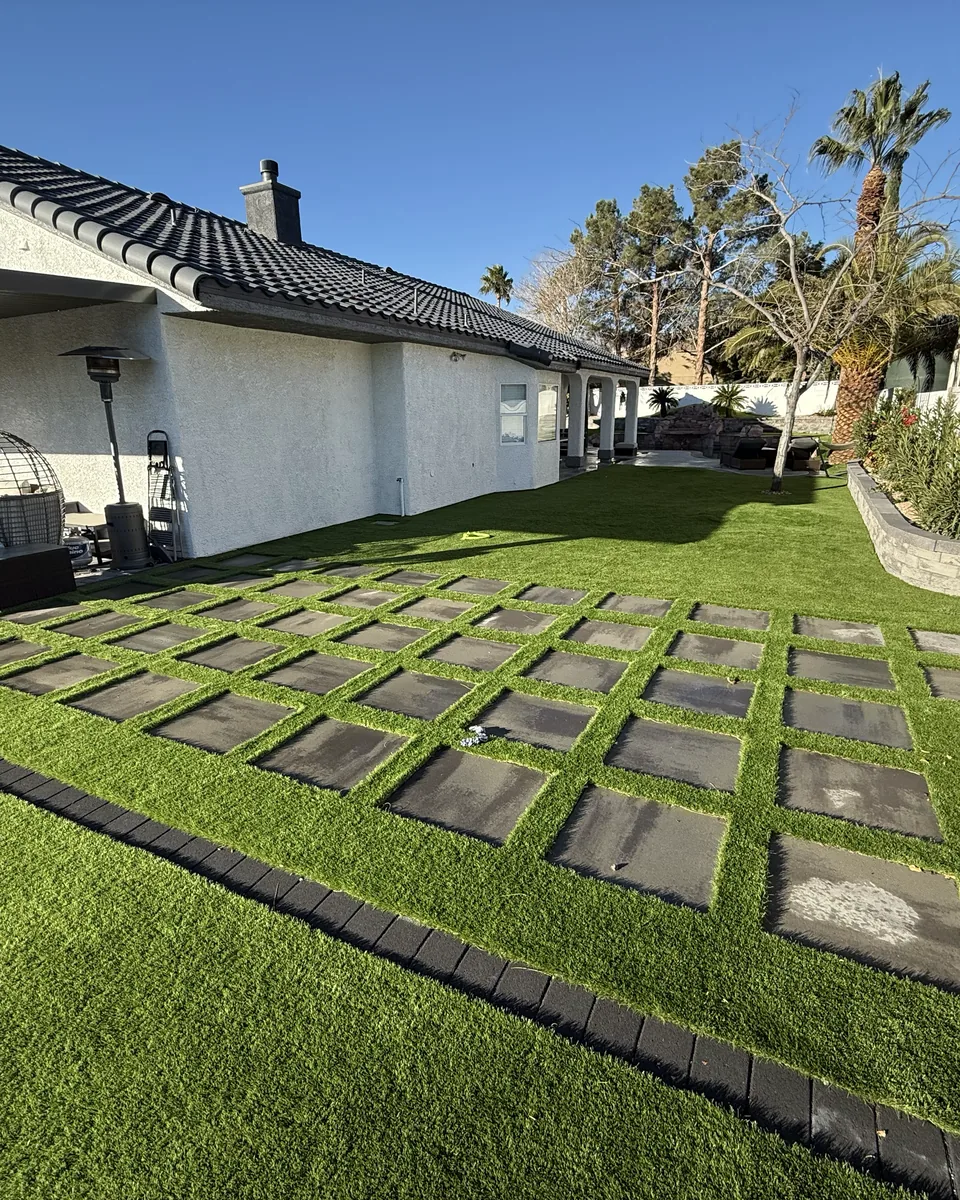
Why the middle of the yard is never the problem
Dogs do not choose the middle, and the middle is the only part most people actually look at.
Left to themselves, dogs pick spots with cover, shade, a bit of privacy, and something to back up against. That is instinct, not preference, and it is why the same three or four locations get used over and over while the open ground stays clear for weeks.
Which means the way most people search is backwards. Standing on the patio and scanning the yard finds the one obvious pile in the open and misses the six around the perimeter. The searching problem is not effort. It is that the search happens where the waste is not.
The other half of the difficulty is time. Anything left out here dries and hardens, and the drier it gets the more it looks like the ground it is sitting on. What happens to it over the following days is covered in the post on how long dog waste takes to decompose in a Vegas yard, and the short version is that it does not go anywhere, it just gets harder to see.
Under bushes and along the base of the block wall
The wall line is the single highest yield place to look in almost every yard in this valley.
Block walls are on every side of most lots here, and the base of a wall gives a dog exactly what it wants: something solid behind, shade for part of the day, and a route they already walk. Add a shrub, an oleander, a planter or a row of lantana against that wall and it becomes the preferred spot in the entire property.
Two specifics worth knowing. First, waste that goes under a low shrub is often several inches back from the drip line of the plant, so looking at the edge of the bush is not enough. Second, the corners where two walls meet collect more than the straight runs do, because they offer cover on two sides.
Behind the shed, the AC unit, and the pool equipment
Anything with a gap behind it is a location, and every Vegas yard has three or four of them.
The regulars:
- Behind or under a shed. Especially a shed on blocks with clearance underneath.
- Behind the air conditioning unit. Shade for most of the day and nobody ever goes back there.
- Around pool equipment. Pumps, filters, and whatever pad they sit on.
- Behind a raised planter or a retaining wall.
- Under a deck, a bench, or patio furniture that never moves.
- Behind stored items. The stack of pavers, the spare pots, the bike nobody rides.
The honest reason these get missed is not carelessness. It is that they require you to walk back there and look, in July, in the heat, and reaching in behind equipment is nobody's favorite way to spend a morning. That is exactly why they build up.
The gap where the gravel meets the wall
The seam is its own problem and it deserves its own heading.
Where loose ground cover meets a hard edge, whether that is a block wall, a concrete mow strip, a patio edge or a paver border, the rock sits deeper and looser than it does out in the field. Anything that lands there sinks slightly, and once it has dried it is level with the surface and effectively invisible from standing height.
Getting it out of that seam is a technique question rather than a searching one. Lifting from underneath rather than scraping along the edge keeps it in one piece, and on rock a piece that stays whole is the whole objective. The detailed version is in the guide to cleaning dog waste out of rock and gravel landscaping.
Shade in summer, sun in winter: the spots move with the season
This is the part that makes the difference between a list and an understanding.
Dogs choose by comfort, and comfort in a Las Vegas backyard reverses twice a year. In summer they go where it is shaded, which is the north side of a wall, under whatever is planted, behind the house, and along the strip that gets afternoon shade. In winter, in a valley where mornings are genuinely cold, plenty of dogs go where the sun hits first.
So the corner that was spotless in January is the busiest area in July, and the owner who learned their yard's pattern last winter is now searching a map that has changed. It also explains the experience of finding a build up in a spot you were confident about, which is one of the more demoralising parts of doing this yourself.
The practical response is simple: walk the whole perimeter every time regardless of what you found last month, and expect the concentration to move about twice a year.
If you would rather not track any of that, a fixed weekday routine handles it by default. You can get a quote in about a minute.
The order to walk a yard so you stop missing things
A pattern beats a scan. Same route every time, and the yard stops surprising you.
- Start at the gate and go one direction around the perimeter. Pick clockwise or counter clockwise and always use the same one.
- Follow the wall line the whole way, including the corners. Look under every shrub as you pass it, not from the edge but under it.
- Take each obstacle as you reach it. Shed, air conditioning unit, pool equipment, planters, stored items. Behind, not near.
- Then do the open middle. It takes a minute because there is rarely much there.
- Hard surfaces last. Patio, walkway, concrete pad, where anything left shows up and where residue matters most.
- Finish where you started and look back across the yard. Low angle light will show you what you walked past.
Two conditions make all of it easier: low sun, early or late, which throws shadows that separate waste from the ground, and clearing often enough that you are looking for one or two objects rather than fifteen.
That order is close to the way a visit runs, and the full walkthrough of a service visit from the gate onward is in the post on what a pooper scooper visit includes. What each visit covers is set out on the services page: the whole yard walked including every spot in this post, waste bagged and put into your own trash bin on site, and a photo of the cleared yard afterward so you can see the corners you cannot see from the door.
Get a quote for regular yard cleanup. It takes about a minute and service runs Monday to Friday. Questions first? Call or text (725) 200-2028.
Want your exact monthly price for this yard? The quote form takes about 60 seconds.
Get my free quote