
Quick answer
How often should a clinic pet relief area be cleaned?
More often than its size suggests, because a relief strip is a small area taking heavy repeat traffic, so residue builds fast. Most Las Vegas clinics and grooming shops run multiple visits a week and add frequency in summer. Work is outdoor only, the relief area, walkway, and adjacent hard surfaces, Monday to Friday, with waste bagged into the property's own bins.
Pet relief area cleaning in Las Vegas is one of those small jobs that has an outsized effect on how a practice is perceived. The strip of grass, gravel, or turf outside a veterinary clinic or a grooming shop is where a nervous dog goes before it comes through your door, and it is the first surface every client walks past on the way in.
This post is written for practice owners and managers. It is short on purpose, because the problem is specific.
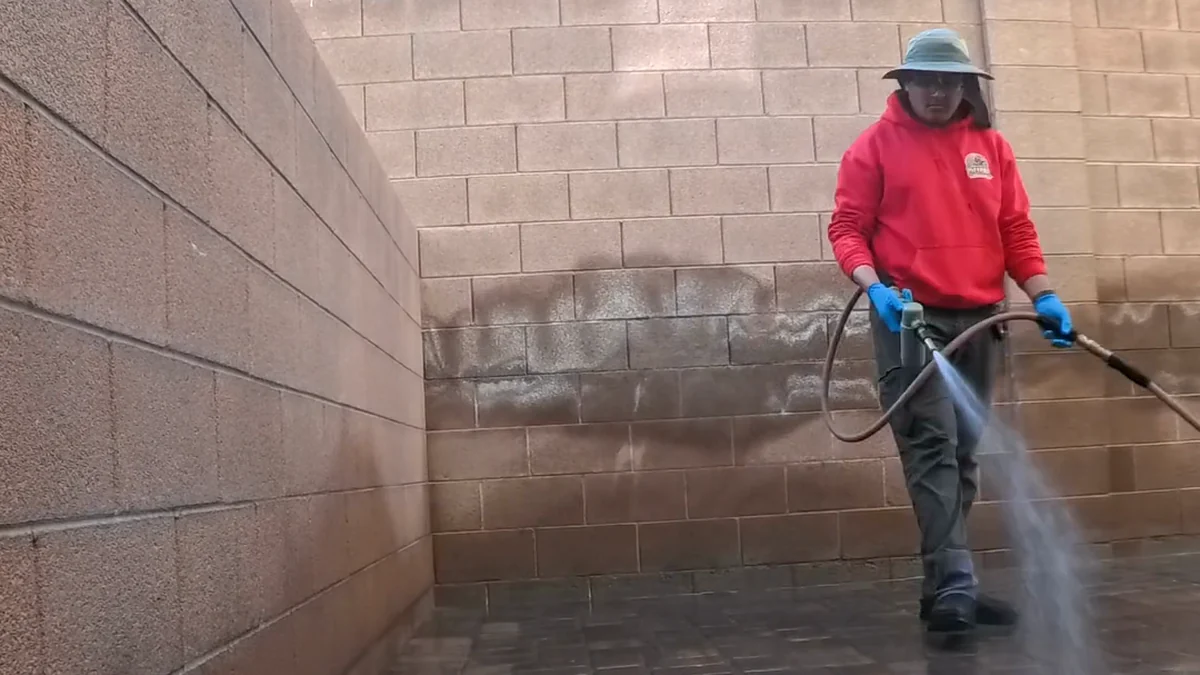
Why the relief area is a first impression
Clients form an opinion of a practice before they reach reception. They are walking a dog that is already anxious, they are looking at the ground because the dog is pulling toward it, and the state of that patch registers immediately.
A well kept relief area reads as a practice that pays attention. A neglected one reads as the opposite, and it does so at exactly the moment a client is already tense about the visit. That is an unfair amount of weight for a few square feet to carry, but it carries it anyway.
The same applies to a grooming shop, often more so, because the client is leaving a pet in your care and is scanning for reasons to feel good or uneasy about that decision.
Small area, heavy traffic, fast buildup
The mistake people make with a relief area is treating it as a small job because it is a small space. Load per square foot is what matters, and on that measure a relief strip is one of the heaviest use surfaces in the pet business.
Consider what it takes in a day. Every dog arriving, many of them going right there because that is what it is for. Dogs that are stressed, which affects both frequency and consistency. Dogs coming out of a procedure or a bath. Dogs whose owners are distracted enough that a pickup gets skipped. And all of it landing on the same handful of square feet, over and over, in the same spots, because dogs follow scent to where other dogs have already gone.
That concentration is why a relief area can be visibly clear and still be a problem. The solids are gone. What is left is residue in the surface, and in a small area that accumulates fast.
If you want a schedule priced for your property, you can start a quote or read how recurring work is structured on the commercial pet waste service page.
Summer odor and clients waiting outside
Las Vegas summer makes this worse in two ways that stack.
First, heat speeds up how quickly residue on a warm surface becomes something you can smell. A strip that is fine in February can develop a noticeable odor within a day or two in July, especially if any part of it stays damp.
Second, clients spend more time near it than they used to. Plenty of practices have people wait outside or in the car and come in when called, and clients standing in the shade near the entrance are standing near the relief area. In summer that is the moment when the smell is at its worst and the client has nothing to do but notice it.
Every practice has one warm afternoon where a client mentions it. The point of a schedule is that it never gets to that afternoon.
Why a client facing strip needs sanitizing on a schedule
Removal handles what is there. It does not handle what has soaked into the surface, and on a small high traffic area that residue is the main source of odor.
Most relief areas are hard surface, gravel, or artificial turf. Unsealed concrete is porous and holds odor after the mess is gone. Gravel drops material down between the stones where hosing pushes it deeper rather than removing it. Turf sends residue into the infill where it is out of reach of any surface cleaning. In all three cases a rinse is the least effective option and often makes things worse by adding moisture.
That is what sanitizing and deodorizing is for: addressing residue and odor on the surface after waste has been removed. Two things to be clear about. Removal comes first, because treating a surface that still has waste on it does nothing. And this is exterior maintenance, not clinical hygiene. Your practice sets its own standards for anything that matters medically, and outdoor sanitizing sits outside that entirely. Any question about protocol belongs with your practice and your own professional judgment, not with a yard service.
Fitting service around clinic hours
The scheduling constraint here is different from a daycare, where the yard is behind the building. A relief area is in front, in the client path, and often in the parking lot.
What works in practice:
- Early or between peaks. Before opening or during a predictable quiet stretch, so nobody is working around clients and dogs.
- Multiple short visits over one long one. A small area benefits far more from frequency than from duration.
- A set day pattern. Fixed days mean your front desk knows the answer when a client asks, and you are not chasing anyone.
- A summer step up agreed in advance rather than negotiated during a heat run.
Two practical notes. Service runs Monday to Friday, so anything you need covered outside those days stays with your own staff and should be planned rather than assumed. And waste goes into your own bins on site, bagged, with nothing carried off the property.
If you also run play yards or boarding runs, those are a different job with different surfaces and volumes, covered in the post on doggy daycare pet waste removal in Las Vegas.
Common questions from practice managers
Do you cover clinics and grooming shops?
Yes, outdoor relief areas and adjacent walkways, quoted per property, Monday to Friday.
Is anything inside the building included?
No. This is exterior work only. Interior stays with your staff and your protocols.
How often should the relief area be serviced?
More often than its size suggests, because load per square foot is high. Most practices run multiple visits a week and add frequency in summer.
Does sanitizing count toward clinical hygiene?
No. Treat it as exterior maintenance addressing residue and odor. Your practice owns anything clinical.
Where does the waste go?
Into your own bins on site, bagged. Nothing leaves the property.
Setting up a routine for your practice
The relief strip is small enough that it is easy to leave to whoever has a spare minute, which is why it usually ends up on nobody's list. Putting it on a fixed schedule is the entire solution.
Start a quote for your practice, or see the commercial service page for how recurring commercial work is set up. Prefer to talk it through first? Call or text (725) 200-2028.
For the treatment side of a client-facing strip, why Las Vegas yards need sanitizing more than most covers what sanitizing addresses on a heavily used surface, and stopping a bin from smelling in Vegas heat covers the container the waste sits in between pickups.
Want your exact monthly price for this yard? The quote form takes about 60 seconds.
Get my free quote