
Quick answer
Is valley fever in dogs caused by dog poop?
No. Valley fever comes from a fungus that lives in desert soil and gets breathed in from disturbed dust, so it is not connected to dog waste and scooping is not what prevents it. What a Las Vegas yard routine can help with is the dust itself: covered, settled ground instead of bare torn up dirt. Anything about your dog goes to your veterinarian.
Let me start with the correction, because it is the whole reason to write this. Valley fever in dogs is a soil story, not a waste story. It is associated with a fungus that lives in desert dirt in parts of the southwest and gets breathed in from dust. It has nothing to do with dog poop, and no amount of scooping is what prevents it. I clean yards for a living in Las Vegas and I am not a veterinarian, so nothing here is veterinary advice. Your vet handles the dog. I am only going to talk about the ground.
What Valley Fever Is and Where It Comes From
The short version, in plain language: valley fever is an infection linked to a fungus that lives in soil in dry parts of the southwestern United States. People and dogs get exposed the same way, by breathing in dust from disturbed dirt. It is not passed from a dog to a person, and it is not something you catch off a pile in the yard.
That is genuinely as far as I am willing to go on the biology. How common it is here, how it is diagnosed, how it is treated, and what any of it means for your specific dog are all questions for a veterinarian who can actually examine the animal. I am not going to print a statistic or a treatment on a scooping company's blog, and you should be skeptical of anyone who does.
Why Digging Dogs Are the Ones People Worry About
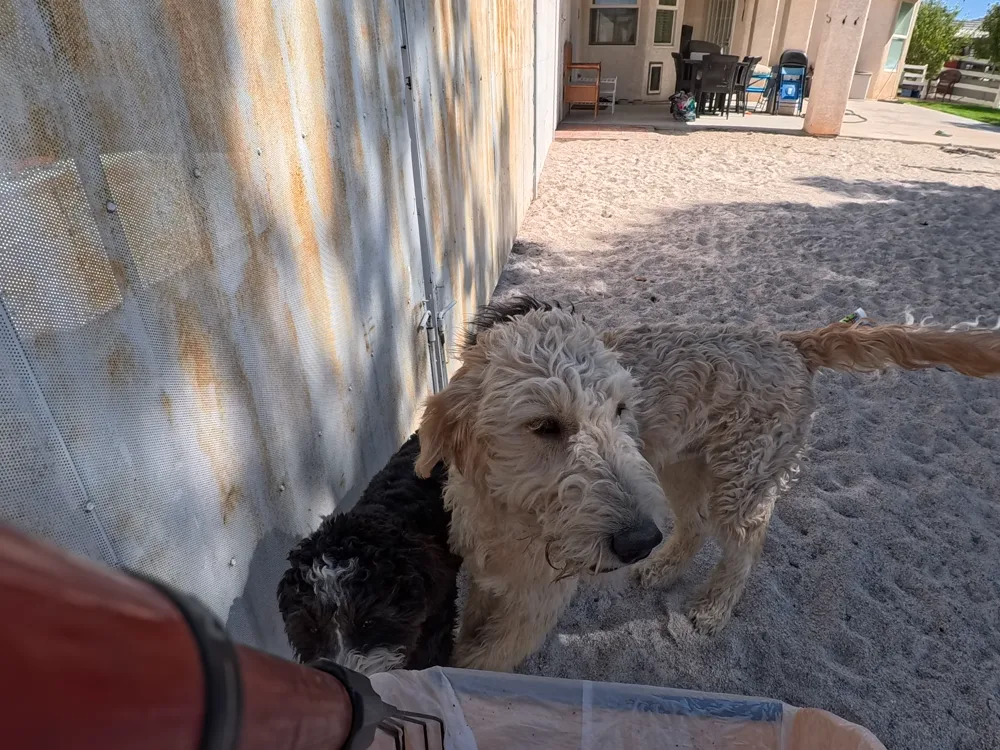
The reason this topic lands in yard conversations is behavior. A digging dog is doing three things at once: breaking up settled ground, throwing dry material into the air, and putting its nose directly into the cloud it just made. If you have ever watched a dog go after a spot in the corner of the yard, you have watched a very efficient dust generator.
Dogs dig for ordinary reasons. They are hot and looking for cooler ground. They heard something. They are bored, or they have found the one soft patch in a hard yard. None of that is a behavior problem you need to fix out of fear, and I am not suggesting you stop your dog from being a dog.
It is worth knowing which corner is the dig corner, though, because that spot is usually the loosest and driest ground on the property, and it is often the spot getting used for everything else too.
What This Has to Do With Your Yard, and What It Does Not
Here is the honest boundary, stated plainly so nobody reads this as a sales pitch.
What a yard routine does not do: it does not address a soil fungus, it does not make any yard "clean" in a medical sense, and no service, mine included, should tell you it protects a dog from valley fever. That would be a claim nobody can back up.
What is actually true: the yard conditions that go with a neglected property are the same conditions that produce a lot of dust. Bare torn up dirt, no ground cover, dead patches, and a dog that has taken over one corner. If your yard is in that state, dealing with it is worth doing on its own merits. Just do not let anyone sell it to you as a health treatment.
The general write up on dog waste and Las Vegas summer heat is the place to read about what waste itself can carry, which is a separate subject from this one and one where the yard genuinely is the lever.
Dust, Disturbed Soil, and a Bare-Dirt Backyard
If you want to do something practical about dust in a desert yard, it is not complicated and it has nothing to do with products.
- Cover the bare ground. Rock, decomposed granite, turf, or planting. Settled and covered ground moves less material into the air than loose open dirt does.
- Deal with the dig spot instead of ignoring it. A hole that keeps getting reopened is a spot the dog has claimed. Sometimes the answer is shade nearby, sometimes it is giving the dog a better place to do it on purpose.
- Keep one corner from becoming the do-everything corner. When a dog uses the same shaded patch for digging and for going, that ground takes a beating and never recovers.
- Do not go the other way and turn the yard into a hardscape the dog hates. Dogs need shade and somewhere tolerable to stand. The post on dog friendly backyard ideas for Las Vegas yards covers laying out a yard that works for the dog and stays easy to keep clean.
If your ground cover is rock and you are wondering how that changes cleanup week to week, the guide to dog poop in rock and gravel landscaping is the practical companion. And if you want to hand the weekly clearing off entirely, the quote form prices it on how many dogs you have, how big the yard is, and how often you want service.
Signs That Send You Straight to the Vet
I am not going to list a diagnosis. What I will say is the thing every good vet says anyway: a dog that is off, and stays off, gets seen.
A cough that does not clear up. Energy that drops and does not come back. A dog that goes off its food. A new limp with no obvious injury. Any of those is a reason to call your veterinarian, regardless of what you think caused it, and in a desert climate your vet has heard all of it before and knows what questions to ask. Tell them what you are seeing and mention if your dog spends a lot of time digging or out in open desert. That is useful information for them. Working out what it means is their job, not yours and definitely not mine.
What You Can Reasonably Control at Home
Very little of valley fever is under a homeowner's control, and pretending otherwise would be the dishonest version of this article. What you can control is the general state of the ground: covered instead of bare, settled instead of torn up, shaded where the dog actually spends time, and cleared of waste so one corner does not become the spot where everything happens.
That is a good yard for a dog for a dozen ordinary reasons. Fewer flies, less odor, better footing, cooler ground, and a space you actually want to use. Treat the dust part as a small bonus rather than the reason, and take anything medical to the person with the license.
If keeping the yard cleared is the part that keeps sliding, that piece I can take off your hands. Tell me how many dogs, how big the yard is, and how often you want service, and the quote form gives you a number in about a minute. Service runs Monday through Friday. Questions? Call or text (725) 200-2028. Anything about your dog's health goes to your vet.
Get my free quoteCommon Questions About Valley Fever and Your Yard
Is valley fever caused by dog poop?
No. It is linked to a fungus in desert soil and is breathed in from dust. Scooping is not what prevents it.
Can my dog get it from digging in the backyard?
Digging is what owners ask about because it stirs up dust. Whether any given yard carries anything is not something you can tell by looking. Ask your vet about risk for your dog.
Does rock or turf make a difference?
Only in terms of dust. Covered, settled ground puts less material in the air than bare loose dirt does.
When should I call the vet?
Any time your dog is off and stays off. A lingering cough, dropped energy, no appetite, or a new limp all get a call.
Does a scooping service help with valley fever?
Not directly, and I am not going to claim it does. Removal addresses waste. The only overlap is that a maintained yard tends to have less bare torn up ground.
This guide stays on the soil and the health side on purpose. Why dogs dig in a desert yard covers the behaviour itself and what to change before you try to correct the dog.
Want your exact monthly price for this yard? The quote form takes about 60 seconds.
Get my free quote