Quick answer
What makes a backyard dog friendly in the desert?
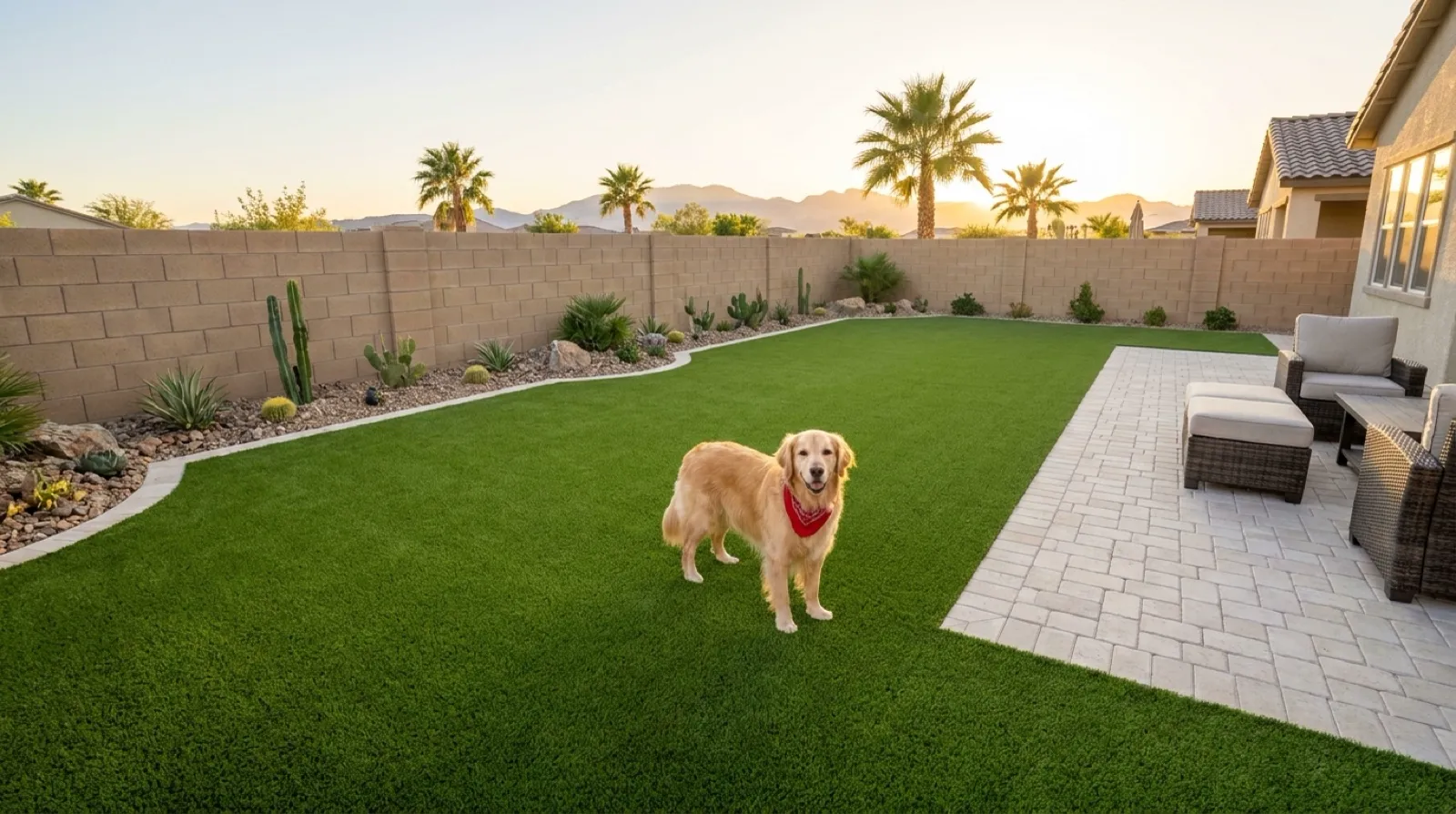
Shade the dog can reach in the afternoon, ground it will stand on when hot, water within reach, and one defined spot to go. In a Las Vegas yard, design around the habits your dog already has, keep planting out of the traffic lanes, and fix damp corners, since irrigation, not rain, creates them. Avoid tight corners nothing can be cleared from.
Most dog friendly backyard ideas for Las Vegas yards are written by people who have never had to clean one. They look great in a photo and then the first summer arrives, the dog picks the one corner nobody thought about, and the design falls apart. I am in a lot of Vegas backyards every week and I see which layouts hold up. This is the layout and design level: how to arrange a yard so it is genuinely good for the dog and stays easy to keep clean. The material by material argument lives in its own posts and I will point you there.
Start With How Your Dog Actually Uses the Yard
Before you draw anything, spend a week watching. Not planning, watching. Dogs are creatures of habit and yours has already made most of these decisions for you.
Where does the dog lie down in the afternoon? Where does it go when it needs to go? Does it patrol the wall line, and if so, which side? Is there a corner it disappears into? Does it dig, and always in the same spot?
Every one of those is information. A design that fights an established habit loses. A design that works with one is basically free. If your dog already goes in the shaded corner behind the shed, that corner is your potty area whether you planned it that way or not, and you are better off making that spot easy to clear than trying to relocate the whole routine.
Shade First, Everything Else Second
In this climate shade is not decoration, it is the thing that decides whether the yard gets used at all. From roughly late spring to early fall, a yard with no shade is a yard your dog crosses on the way to somewhere else.
Practical shade beats pretty shade. A patio cover, a solid awning, a shade sail, or an established tree all work. A young tree does not, not for years. Whatever you choose, check where the shade actually lands in the afternoon rather than at noon, because the hot part of a Vegas day is later than people expect and shade that is perfect at midday can be useless at four.
Two things follow from getting the shade right. The dog stays where you can see it instead of hunting for cover in the side yard, and the ground under that shade is where a lot of the yard's activity concentrates. Plan the cleanup around that spot, because it will be the busiest ground on the property.
Surfaces a Dog and a Scooper Can Both Live With
I am staying at the design level here on purpose, because there are two posts that go deep on this. The gravel versus turf versus grass comparison handles the category choice, and the guide to ground cover for a dog yard gets into specific materials like decomposed granite, pea gravel, river rock, and mulch.
The design level point is this: whatever you pick, pick it knowing how it behaves when something has to be lifted off it. Some surfaces hold waste on top where it comes up cleanly. Some let it settle down in and hide. Some hold heat that a dog will not stand on in August. A surface that scores well on looks and badly on both of those is going to make you unhappy in a way the showroom did not mention.
Mixing surfaces is normal and usually right. A patio, a turf or grass area, a rock border, and a working area for the dog is a sensible split. Just avoid creating narrow transitions and fiddly edges where nothing can be cleaned properly, because that is where mess accumulates and stays.
Paths, Borders, and a Designated Spot
Dogs use edges. They walk the wall line, they follow the fence, they cut the same corner every time. If you know that going in, you can put a hard path where the dog already walks instead of watching it wear a trail through the part you wanted to look nice.
Borders do real work too. A raised edge, a header, or a change of material tells the dog where one zone ends, and more importantly it stops rock migrating into turf and turf debris migrating into rock. Clean edges are easier to clear and they look intentional.
The designated spot is the highest leverage idea in this whole post. One defined area, somewhere the dog would naturally choose, with a surface you can clear fast, saves the rest of the yard from the wear and concentrates the cleanup into a few square feet. It is not automatic and it does take some work with the dog. The post on training a dog to go in one spot covers the behavior side, which is the part that makes or breaks it.
If you would rather have the clearing handled for you once the yard is built, the quote form prices service on how many dogs you have, how big the yard is, and how often you want it.
Plants, Water, and the Corners That Go Sour
On plants, I am going to be careful, because this is exactly where blog posts get people in trouble. Lists of what to avoid vary from source to source, they are not written for your climate, and they are certainly not written for your dog. Ask your veterinarian before anything goes in the ground, especially if you have a chewer. It is a short conversation and they will give you a straight answer.
Design wise, keep planting out of the traffic lanes. Beds along a wall where a dog patrols get trampled and marked. Beds tucked out of the flow survive.
Water is the part almost every yard gets wrong. Drinking water within reach in the shade is obvious and people still forget it. The less obvious half is drainage. Every damp corner in a Vegas backyard is a manufactured one, because it is not rain doing it, it is irrigation. A leaking emitter, a low spot that holds water, or a shaded strip that never dries becomes the sour corner: soft ground, odor that lingers, and insects. Design the water so nothing stays wet, and if a line is already leaking, that is a job for an irrigation tech or a landscaper, not something to work around forever.
Designing for the Cleanup, Not Just the Photo
Here is the test I would apply to any plan before it gets built. Can somebody walk the whole yard in a pattern without stepping over things? Can every surface be cleared, not just swept? Is there anywhere waste can end up that you would not see from the patio? Is there any spot too tight to get into?
The yards that stay nice are the ones where the answer is yes, yes, no, and no. The yards that go bad are almost always the ones with a beautiful main area and one impossible corner that quietly becomes the dog's favorite place.
You do not need a perfect yard. You need a yard where the weekly reality is quick, so it actually happens.
Building a yard for your dog, or already have one and just want the cleanup off your list? Tell me how many dogs, how big the yard is, and how often you want service, and the quote form gives you a number in about a minute. Service runs Monday through Friday and every visit ends with photos. Questions first, call or text (725) 200-2028.
Get my free quoteCommon Questions About Dog-Friendly Yards in Las Vegas
What actually makes a backyard dog friendly here?
Reachable shade in the afternoon, ground the dog will stand on in the heat, water within reach, and a clear place to go.
What is the lowest maintenance dog yard in the desert?
There is no zero maintenance version. Aim for quick and predictable: a defined potty area, clearable surfaces, and no hidden corners.
Which plants can I put in with a dog?
Ask your vet before anything goes in the ground. Online lists vary and they are not written for your dog or this climate.
Is a designated potty spot worth it?
Yes, if it is somewhere the dog would already choose. It concentrates the mess and spares the rest of the ground.
Does landscaping change how often I need service?
It changes how hard each visit is. Frequency follows dog count, usable space, and how much the yard gets used.
Want your exact monthly price for this yard? The quote form takes about 60 seconds.
Get my free quote