
Quick answer
How do I set a yard routine for a new rescue dog?
Spend the first week watching rather than correcting, noting where the dog goes, which surface it picks, and whether it avoids the open middle. Then reinforce the spot it already chose using the same door, route, and reward every time. Reset the Las Vegas yard before or right after the dog arrives so you can read new habits against a clean baseline.
Setting a new rescue dog backyard routine is a different job from raising a puppy, and most of the advice online quietly assumes you have a puppy. An adult rescue does not arrive blank. It arrives with a full set of habits somebody else installed, and you do not get the manual.
Quick note before anything else: I scoop yards in Las Vegas. I am not a vet and I am not a trainer. Anything about your dog's health goes to your veterinarian, and anything about serious behavior goes to a qualified trainer or behaviorist. What I can talk about is what happens in the yard, because I see a lot of yards in the first month of a new dog.
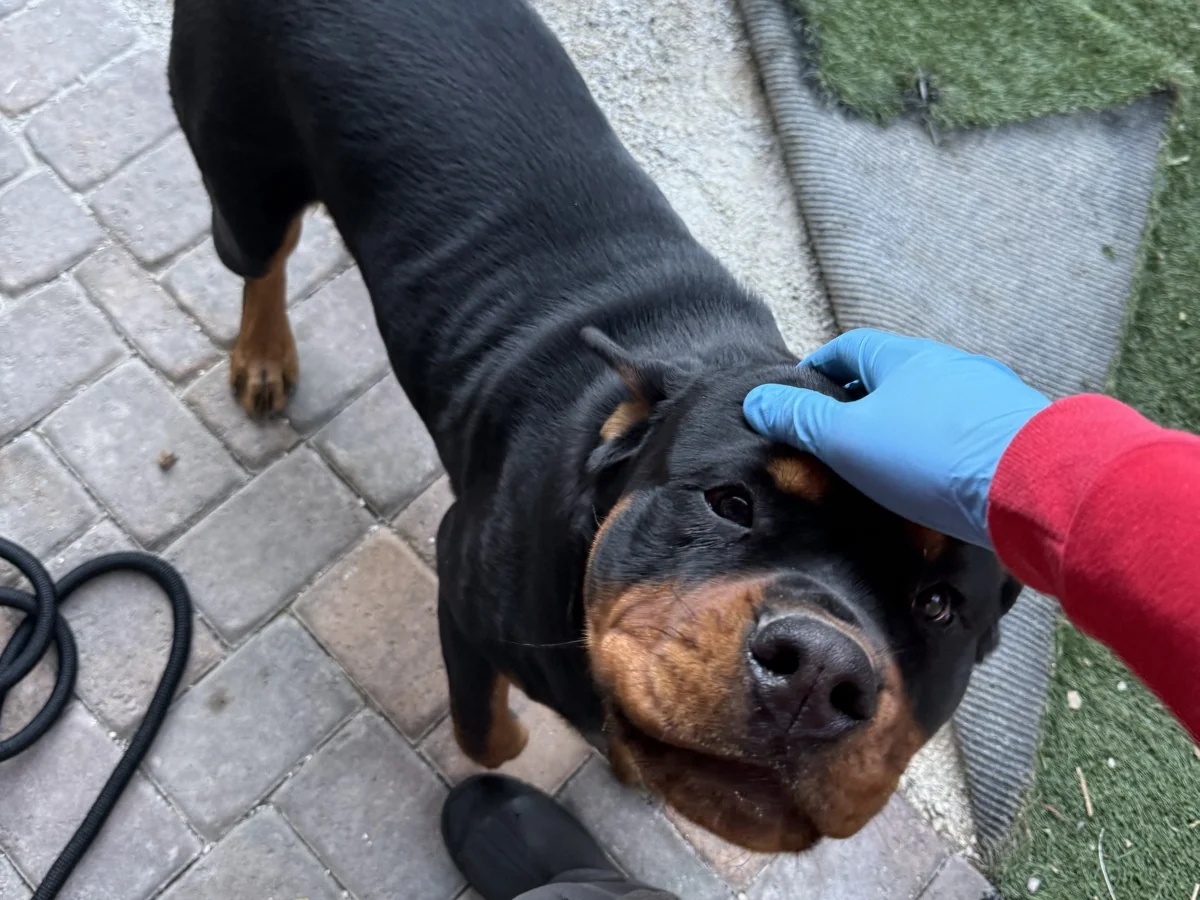
What Is Different About an Adult Rescue
A puppy is learning for the first time. An adult rescue is relearning, which is slower and occasionally harder, and it is also more confusing for the human because the dog seems like it should already know.
Three things are usually true. The dog has an existing preference about surface and location that you did not choose. The dog may have spent time somewhere with a very different setup, including a kennel where going near where it slept was normal. And the dog is under stress in a new place, which affects everything including its stomach and its bladder.
None of that is a problem to fix in week one. It is information to gather. If you happen to be bringing home a puppy instead, the new puppy yard cleanup guide is written for that, and it is a genuinely different set of expectations.
The First Week: Watch Before You Correct
The most common mistake I see is people trying to install a routine on day two.
The first week is for watching. Where does the dog go when you open the door. How long does it take. Does it circle a particular surface. Does it avoid the open middle of the yard entirely. Does it hold it when you are standing there watching. Does it want the shaded strip or the sunny gravel.
All of that tells you what you are working with, and it costs you nothing but attention. Correcting a dog before you understand its pattern usually just teaches it that going in front of you is a bad idea, which is the opposite of helpful.
Practically, that means going out with the dog rather than opening the door and going back to your coffee. It is a week. It is worth it.
Picking a Spot and Making It the Habit
Once you can see where the dog naturally prefers to go, you have two options: move it, or work with it.
Working with it is usually easier and it is almost always faster. If the dog has settled on a corner that you can live with, reinforce that corner. Take the dog there on lead, every time, same route, same door. Reward when it happens. Consistency is the whole mechanism and there is not much more to it than that.
If the preferred spot genuinely does not work, because it is against the patio or right where the kids play, then you are moving a habit rather than creating one and it will take longer. The post on training a dog to use one spot covers that process properly. It works with adults. It just asks more of you.
One honest caveat. No training method is a sure thing, especially with an adult whose history you do not know. Anyone telling you otherwise is selling something.
Stress, Diet Changes, and an Unsettled Stomach
Almost everyone who adopts an adult dog runs into this in the first couple of weeks, and almost everyone is surprised by it.
The dog changed environments, changed people, changed schedule, and usually changed food, all in the same day. An unsettled stomach in that stretch is common enough that most rescues will mention it to you up front. Asking what the dog was eating before, and switching gradually rather than all at once, is the ordinary advice and it is easy to follow.
What I will not do is tell you when it is normal and when it is not, because that is exactly the judgment a vet is for. If it persists, if there is blood, if the dog seems unwell in any other way, or if you are simply worried, call the clinic. That is not being cautious for legal reasons. That is genuinely the right move.
On the yard side, the practical piece is that a runny mess in a rock or turf yard is much harder to deal with than a normal pickup and it needs to be handled fast in this climate. The guide to cleaning up dog diarrhea in a Las Vegas yard is the one to have bookmarked in month one, because you will probably need it.
Heat, Paws, and a Dog New to the Desert
If your rescue came from somewhere cooler, or from a shelter environment where it did not spend much time on open ground, this valley is a shock.
Ground surface temperature is the thing people underestimate. Decorative rock, concrete and dark turf hold heat long after the air has started to cool, and a dog that will not go out at four in the afternoon in July is not being stubborn. The old back of the hand test is the practical one: if you cannot hold your hand on it comfortably, it is not a surface to send a dog across.
What that means for a routine is that the first month may give you a false picture if you adopt in summer. The dog will go where it can stand to stand, which might be a shaded strip it abandons in October. Build the routine around where it wants to go once the surface is tolerable, and expect the pattern to shift with the season.
Anything about heat and your specific dog, especially a flat faced dog, a senior, or one with a heavy coat, goes to your vet. That is not a general rule you should take from a blog.
Digging, Marking, and the Fence Line
The fence line is where a new rescue's anxiety shows up physically.
Digging along the wall, patrolling the perimeter, and marking heavily in the first weeks are all common in a dog that is still deciding whether this place is theirs. Most of it settles as the dog settles. Shade, water, something to do, and a predictable daily rhythm do more than any correction will.
Two things are worth separating out. Digging that is clearly about escape, and behavior that reads as genuine distress rather than boredom, are both worth a call to a trainer or your vet rather than a yard fix. And heavy marking in one area does leave odor in rock and soil that does not simply air out, especially in summer. That is a cleaning problem rather than a behavior problem, and it is what a yard sanitizing and deodorizing visit is actually for.
That is the point where a lot of people decide the yard is not the thing they want to be managing while they are also learning a new dog. Fair enough. The quote form prices a routine for your yard in about a minute, and a one time reset before or right after the dog arrives is a normal way to start.
First month with a new dog is enough to handle. If you want the yard on a set weekday routine with photos after every visit, the quote form gives you a real price in about a minute. Or call or text (725) 200-2028, Monday through Friday.
Get my free quoteCommon Questions About the First Month
How long does it take a rescue to settle into a yard routine?
There is no fixed number. Week one is observation, and a pattern usually shows up by the end of the first month.
Why is my new rescue's stomach upset?
A food change and an environment change at once is a common reason. Anything persistent goes to your vet.
Can you train an adult rescue to use one spot?
Often, with more patience than a puppy takes. Consistency is the mechanism. No method is certain.
My rescue is digging along the fence. Is that a yard problem?
Usually a dog problem: heat, boredom or anxiety. Escape driven digging or real distress goes to a trainer or your vet.
Should I get the yard cleaned before the dog arrives?
Worth it, especially if the previous owner had pets. A clean baseline makes the first month readable.
Two situations sit right next to this one: fostering, where a new dog arrives every few weeks, and the fireworks weeks, which are hard on a dog who has only been in the yard a month.
Want your exact monthly price for this yard? The quote form takes about 60 seconds.
Get my free quote