Quick answer
How should you clean the yard if you board dogs at home?
Clear it between sets of guests rather than on a weekly rhythm, because turnover drives the mess and the calendar does not. In a Las Vegas yard that means walking the gravel and the shaded corners properly, then washing the hard surfaces before the next arrival. Send every health and vaccination question to a vet.
If you are a dog sitter doing home boarding, yard cleanup stops being a household chore and becomes part of the product. The yard is where the dogs spend their unsupervised hours, it is the background of every photo you send, and it is one of the few parts of the job a client can actually evaluate from a distance. Las Vegas has a large host community and almost nothing written for it, so this is the version for one person with a backyard, not a facility.
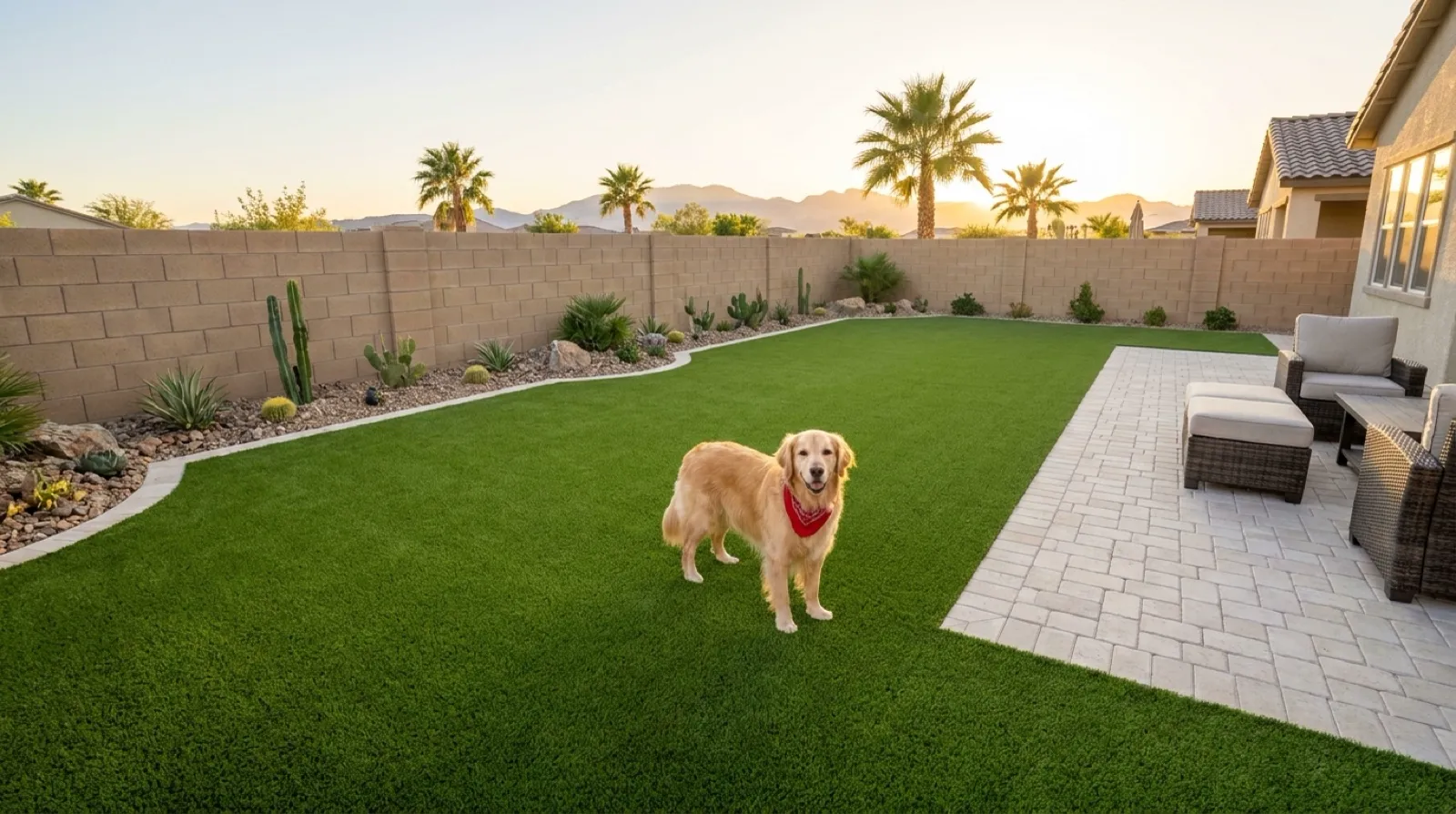
The live post on daycare and boarding facility yard waste is written to a commercial operation with staff and a purpose built play yard. Everything below assumes the opposite: your own home, your own yard, and you.
A Home Yard Doing a Commercial Job
A residential backyard was designed for the household's dog. Home boarding asks it to carry a rotating population, and it was not built for that.
The differences are structural, not cosmetic. Volume is higher and unpredictable. The dogs change weekly. The ground gets no rest between guests. And unlike a facility, there is no drain in the middle of the floor and no surface chosen because it is easy to clean. You have decomposed granite, or turf, or a patch of grass somebody planted before you owned the place.
None of that makes home boarding a bad setup. It is why clients pick it: a house is calmer than a kennel. It just means the yard needs a real routine instead of the one that used to be enough.
Dogs You Did Not Raise, in a Yard You Did
Guest dogs bring habits you did not train and cannot predict.
They mark. They pick their own spot rather than the one your dog uses, which is often right against the patio or beside a door. They dig where they lay, they knock water over, and a nervous first night frequently shows up on the concrete rather than out in the rock.
Two practical consequences. First, spend a little attention watching where a new guest chooses in the first day, because that is where you will be cleaning all week. Second, do not assume a guest will use the yard the way it was intended, especially a dog who has never had a yard at all.
Anything about a guest dog's health, food or medication is between the owner and their vet. Your job is to notice and report, not to interpret.
Turnover, and the Reset Between Guests
The single most useful habit in this whole post: do the reset when a guest leaves, not when the next one arrives.
The departure is calm. The arrival is not. On arrival day there is a handover conversation, a nervous dog, an owner who wants reassurance and your own dogs at the window, and the yard is going to lose that competition every time.
A reset is short if it is done regularly. Walk the whole yard rather than the visible part, which means under the bushes, along the base of the block wall, behind the air conditioning unit and behind anything a dog can get behind. Rinse the hard surfaces the last dog leaned on. Check the gate latches, because guest dogs test gates in a way resident dogs stopped doing years ago. And refill water bowls with clean water rather than topping up the ones that have been sitting.
If you are stacking back to back bookings and there is no gap to do it in, that is exactly the point where handing the yard off makes the most sense. An instant quote takes about a minute and tells you what a routine visit would cost with your dog count and yard size.
What Clients Notice, and What They Photograph
Owners are anxious. They are paying somebody to keep the animal they love, and the update photo is the only evidence they have.
Here is what they actually look at, whether or not they would admit it. Is the ground clear behind the dog. Is there shade. Is the water bowl clean and full. Does the yard look tended or does it look like a yard nobody goes into. A happy dog in a bad background is a mixed message, and the person receiving it is already primed to worry.
So the easiest improvement available to a host is not a new toy or a better camera. It is a clear yard in the frame, every time.
Your Own Dogs Share the Ground
This is the part that hosts think about the least and should think about the most.
Your dogs live on this surface. Guest dogs pass through it. Whatever the yard is holding, it is holding for the animals who never leave, and they get the cumulative version of it.
The live post on why a dog keeps getting worms from the yard explains how a place can keep handing something back to an animal, and it is the most relevant read on this blog for anybody running dogs through their own backyard for money. Read it once. It changes how seriously you take the reset.
And if the dog count in your yard is now regularly higher than the yard was ever meant for, the post on multiple dogs and yard waste covers what that does to the volume. The same logic applies if you foster rather than board, which is covered in the post on the backyard routine between foster dogs.
Reviews, Repeat Bookings, and the Yard's Part in Both
I am not going to promise you anything about your bookings. Nobody honest can.
What I can say is what shows up in the way clients talk about hosts. The details people mention are almost never the big ones. They mention that the house smelled fine, that the photos looked calm, that the dog came home clean. Those are yard adjacent observations, and they are the ones that turn a first booking into a regular.
The reverse is also true and it is more dangerous, because a client who was uneasy about the yard usually does not tell you. They just do not come back, and you never find out why.
Setting a Routine Around Your Booking Calendar
Build the routine off the calendar you already keep rather than a generic weekly rhythm.
Look at your bookings and find the pattern. Most hosts have a heavy stretch and a quiet stretch, and the yard needs different things in each. A fixed routine visit covers the baseline, and a reset before a busy run or after a long stay covers the spikes.
Practical notes: service days are Monday through Friday, the same person comes every visit, waste is double bagged into your own bin on site, and photos of the finished yard land when I leave, which means you have a clear yard on record before a guest arrives. If you are running something bigger than a home setup, the commercial service page covers that side.
Board the dogs. Let me handle the ground they run on. Get an instant quote in about a minute, or call or text (725) 200-2028, Monday through Friday.
Get my instant quoteCommon Questions
How should you clean the yard if you board dogs at home?
Between guests rather than on a weekly rhythm. Full walk of the yard, wash the hard surfaces, check the latches, fresh water.
How often should a home boarding yard be cleaned?
More often than before you started boarding. The dog count moves and arrival days are the heaviest.
Can boarding dogs pass something to my own dogs through the yard?
Ask a vet. What is certain is that the ground is shared, so keeping it clear is the part that sits with you.
What do boarding clients notice about a host's backyard?
The background of your photos. Clear ground, shade and a clean water bowl do more than any caption.
Is a yard service worth it for a home boarding business?
The honest case is the time it gives back on turnover days. Pricing follows dog count, yard size and frequency.
Want your exact monthly price for this yard? The quote form takes about 60 seconds.
Get my free quote