
Quick answer
Is gravel or turf better for dogs?
Neither wins outright. Gravel drains and lasts but gets very hot and holds residue down in the rock layer, while turf scoops easily and holds liquid and odor in the infill underneath. Real grass is the most comfortable surface for a dog in Las Vegas and the most expensive to keep alive.
If you are weighing gravel vs turf for dogs, or wondering whether real grass is still viable in a Las Vegas backyard, here is the honest starting point: there is no perfect surface here. Each of the three fails a dog in a different way, and the right answer depends on your dog, your shade, and how you actually want to spend your time. I am in these yards every week and I have opinions, but they are opinions about trade offs, not about a winner. This post is about choosing. The three posts linked below cover how to clean each one once you have chosen.
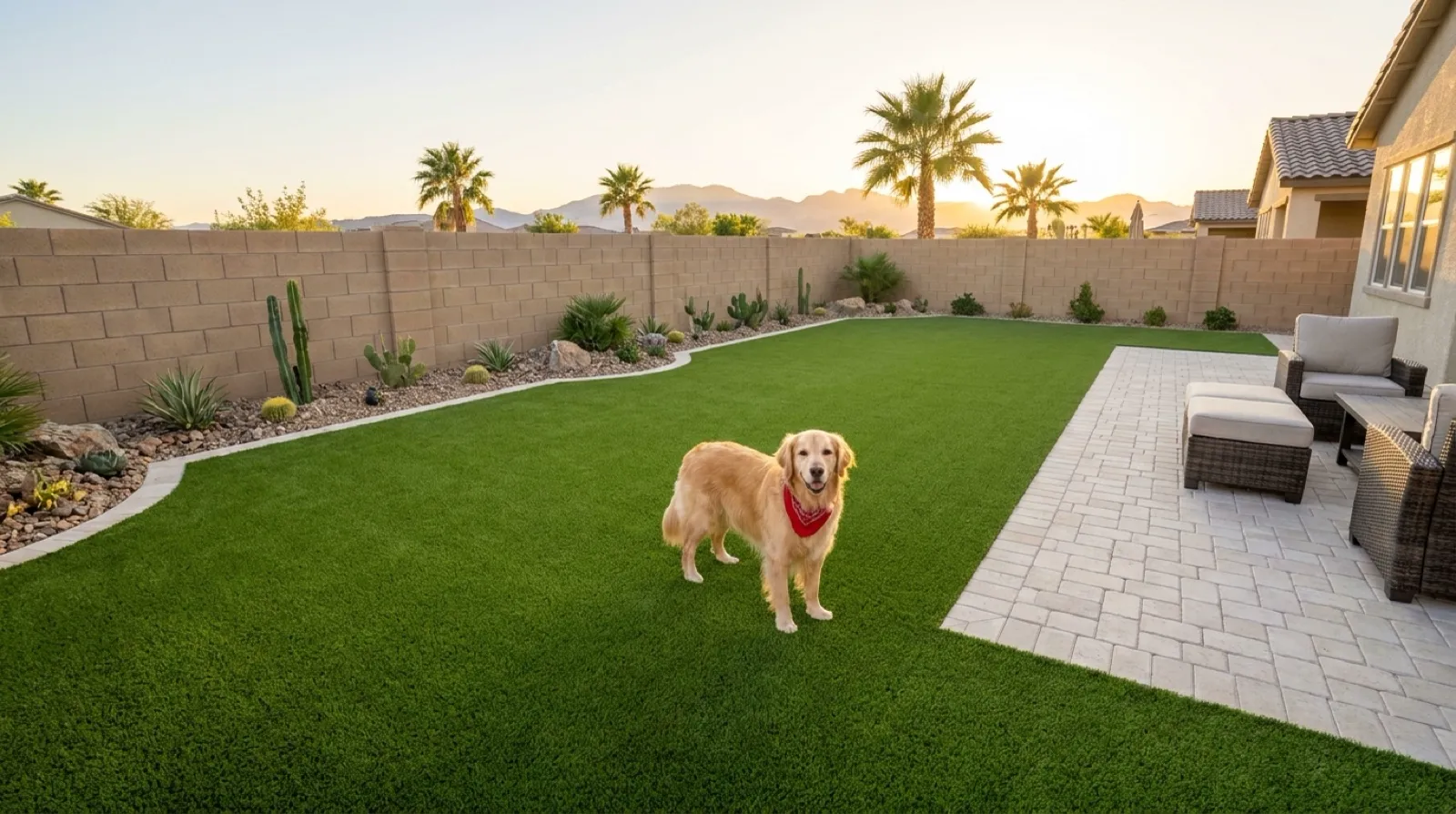
The Three Real Options in a Vegas Yard
Strip out the marketing and there are three ground surfaces in play in this valley, plus hardscape. Decorative rock and gravel, real grass, and artificial turf. Most yards here are some combination.
Before comparing them, one thing worth naming: in Las Vegas, the surface question is really a heat question wearing a costume. Everything else follows from how hot the ground gets, how fast it dries, and how much shade it has. Keep that in mind through the next three sections.
Decorative Rock and Gravel: Cheap, Hot, and Hard to Clean
Rock is the default across most of the valley for good reasons. It needs no water, it does not die, it drains well in a storm, and it costs less to install than the alternatives.
Where it works for a dog: shaded areas, borders, and any part of the yard the dog crosses rather than lies in. It handles digging better than turf does, and it never turns to mud.
Where it fails a dog: heat is the big one. Dark landscape rock in direct sun in July is genuinely unpleasant under a paw, and a dog will simply refuse to use that part of the yard, which pushes it into the shade and concentrates everything there.
The cleanup problem: this is the real cost of rock and nobody mentions it at the landscaping stage. Waste dries fast on rock, breaks apart, and works down between the stones. The visible pile comes up. The residue below the surface does not. Over a year in a yard that is not kept clear, that layer builds. The detail on how to actually work a rock yard is in the post on cleaning dog waste out of rock and gravel landscaping, including why hosing it down is the wrong instinct.
Real Grass: The Water Bill and the Burn Spots
Real grass is the most comfortable surface for a dog in this climate, and that is not a small thing. It is cooler underfoot than anything else in the yard, it is soft to lie on, and dogs choose it over every other option available to them.
Where it works: shaded lawns, older neighborhoods where the trees have filled in, and yards where somebody actually enjoys the maintenance.
Where it fails: water is the obvious one, and in Las Vegas that is a real ongoing cost and increasingly a policy question. Beyond the bill, repeated use in the same spot damages the lawn, and grass hides waste in the blades so it has to be found rather than spotted. The specifics of what causes the burn spots and the thin patches are covered in the post on whether dog waste damages grass in a Las Vegas yard.
The honest middle path that a lot of owners land on is a small grass zone rather than a whole lawn. Enough for the dog to lie on in the shade, small enough that the water and the wear are manageable.
Artificial Turf: Clean Looking Until It Is Not
Turf is the most popular upgrade in newer Vegas yards and it earns a lot of that popularity. It looks green all year, it takes no water, and for scooping specifically it is the easiest of the three: waste sits on top of the blades where you can see it from the patio door.
Where it works: small to mid sized yards, households that want the look without the water, and owners who want the visible surface to stay tidy with minimal effort.
Where it fails: underneath. Liquid passes through the blades into the infill and the drainage layer below, and that layer is where odor concentrates over time, especially in a shaded or low spot that stays damp. Turf also gets hot in direct sun, hotter than most people expect before their first July with it. And dogs that dig will find the seams.
The post on dog waste on artificial turf covers what happens on the surface. The layer underneath is a bigger topic than most turf buyers are told about before they sign.
Mixed Yards and the Zone Approach
Most Las Vegas yards I work in are already mixed, usually by accident: whatever the builder put in, plus whatever the owner changed later. Doing it on purpose works considerably better.
The pattern that holds up:
- Shade gets the soft surface. Turf or grass where the dog will actually rest, which is the coolest part of the yard.
- Sun exposed ground gets rock. The dog is not going to lie there in summer anyway.
- One designated area, chosen by you. A gravel or granite zone the dog is trained toward, ideally out of the main sight lines and away from the patio.
- Hard surface stays hard. Patio, walkway, and the run to the gate. Easiest of all to keep clear.
The zone approach is the single biggest quality of life improvement available in a Vegas dog yard, and it costs less than re doing the whole thing. If you want the material level detail, which granite, which gravel, and how each behaves under daily dog use, that is covered in the post on the best ground cover for dogs in a Las Vegas yard.
Choosing for Your Dog, Not for the Brochure
Four questions do most of the work.
How much shade do you actually have?
If the yard is fully exposed, rock in the open and a soft surface under whatever shade exists. If you have mature trees, real grass becomes viable in a way it is not on a bare new build lot.
Does your dog dig?
A digger will damage turf seams and will move rock around. Grass regrows. That matters more than any other feature comparison.
How big is the dog and how hard does it use the yard?
A heavy dog on the same path every day wears a track into anything. Plan for the path instead of pretending it will not appear.
How do you want to spend your time?
Turf trades water and mowing for occasional deeper attention underneath. Grass trades water and mowing for comfort. Rock trades almost all maintenance for a cleanup job that gets harder the longer you leave it.
Whatever you choose, the cleanup routine is what determines whether the surface stays good. If that is the part you would rather hand off, the quote form asks how many dogs, how big the yard is, and how often you want service, and prices it for the yard you actually have.
Planning a re landscape, or living with a surface that is not working? I scoop all three, and the routine is a little different on each. Get a price in about a minute from the quote form, or call or text (725) 200-2028, Monday through Friday.
Get my free quoteCommon Questions About Yard Surfaces and Dogs
Gravel or turf for a dog?
Neither wins. Gravel is durable but hot and holds residue in the rock layer. Turf is easy to scoop but holds odor in the infill underneath.
Is real grass still worth it here?
It is the most comfortable surface for a dog and the most expensive to keep. A small shaded grass zone is the compromise most owners land on.
Does turf smell worse than rock?
It can, because liquid ends up under the blades. Rock dries fast and spreads material out instead.
Is a mixed yard a bad idea?
It is usually the best idea, as long as you choose the zones deliberately rather than letting the dog choose them.
Which is easiest to keep clean?
Turf, then grass, then rock. Rock is the one that punishes you for waiting.
Choosing is one thing and converting is another. Replacing grass with desert landscaping when you have a dog covers the project itself, and if you are keeping the lawn for now, overseeding with a dog at home is the seasonal version.
Want your exact monthly price for this yard? The quote form takes about 60 seconds.
Get my free quote