
Quick answer
What is the best ground cover for a dog yard?
Decomposed granite is the most workable choice for most Las Vegas dog yards, because the angular particles pack into a firm surface that waste lifts off cleanly. Pea gravel and river rock roll and shift, so waste settles down into the layer. Bark and wood mulch is the least practical of the common options.
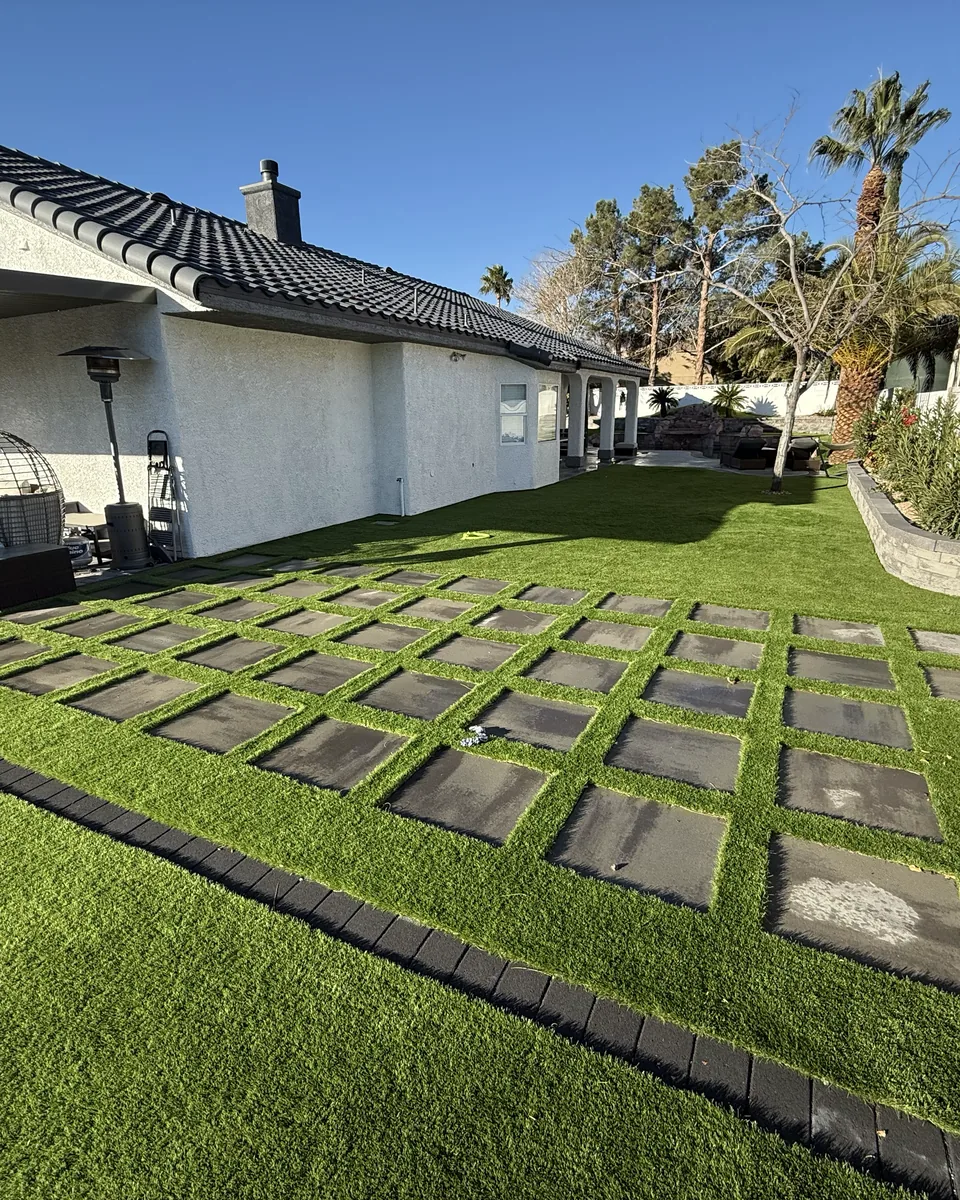
Once you have decided against grass and against turf, the next question is which rock, and that is where the best ground cover for dogs in a Las Vegas yard gets genuinely interesting. Landscapers will talk to you about look, cost, and coverage. Nobody at the yard tells you how a material behaves after a dog has used it every day for a year. That is the part I see, and it is the part this post is about. If you are still choosing between rock, grass, and turf as categories, start with the post on gravel vs turf vs grass for dogs and come back here.
What Ground Cover Has to Survive Here
Any material in a Las Vegas dog yard is being asked to do five things at once:
- Handle heat without becoming a surface a dog will not step on in July.
- Drain during a summer storm without turning into a puddle or washing to the low corner.
- Stay where it was put despite dogs running, digging, and turning at the same corner every day.
- Release waste cleanly when somebody comes to remove it.
- Not hold odor in the shaded, damp part of the yard.
No material does all five well. The choice is about which one you are least willing to compromise on.
Decomposed Granite: Firm Underfoot, but It Packs
Decomposed granite is the workhorse of Las Vegas yards, and for a dog yard it is usually the best of the common options.
What it does well: the particles are small and angular, so they interlock and form a firm surface rather than rolling around. That firmness is the whole advantage. Waste sits on top of a compacted granite surface and can be lifted off it cleanly. Dogs walk on it naturally, it does not stick to paws the way damp organic material does, and it does not migrate across the yard.
Where it costs you: it packs. Over a year or two, foot traffic and irrigation compress it into something close to a hard pan, and a hard pan does not drain the way loose material does. Water sits, and in a shaded corner that means a surface that stays damp. Fine granite dust also works into the top layer along with anything else that has broken down there, which is why the shaded granite strip beside a drip line is so often the exact spot that smells.
Practical note: if you go this route, plan for the sun. Granite in full exposure gets hot enough that a dog will avoid it entirely and use the one shaded patch instead, which concentrates everything into that patch.
Pea Gravel and River Rock: The Scooping Problem
These two get grouped because they fail the same way. Both are rounded, and rounded is the problem.
Pea gravel is comfortable underfoot, drains beautifully, and looks good. It is also loose. The stones roll and shift constantly, so anything on the surface works its way down into the layer rather than staying on top. Removing waste from pea gravel means lifting it out before it settles, because once it has settled a scoop pushes it deeper rather than getting under it.
River rock, the larger smooth stones, has the same issue with bigger gaps. Waste falls between the stones, dries down there out of reach, and stays. On top of that, larger rounded rock is awkward for dogs to walk on, especially older dogs or dogs with any joint issue, and many will simply refuse to use it.
Neither is a disaster. Both simply demand more frequency than a firm surface does, and both are considerably harder to recover if you let a yard go for a couple of months. The cleaning method for rock in general, including why hosing it is the wrong instinct, is covered properly in the post on cleaning dog waste out of rock and gravel landscaping.
Bark and Wood Mulch in a Desert Yard
Mulch is common in planter beds here and occasionally used as a broader ground cover. For a dog area specifically, it is the least practical of the options.
- It holds moisture. That is what it is designed to do, which is useful around plants and unhelpful under a dog.
- It breaks down. Organic material decomposing plus waste sitting in it is a combination that produces odor and attracts insects.
- Dogs interact with it. They chew it, dig it, and carry it into the house.
- Waste vanishes into it. Removal on mulch is genuinely difficult, because there is no clean surface to lift material off.
On the question of whether any specific mulch product is a problem for a dog, I am not the right source and neither is a general blog post. Formulations vary and so do individual dogs. Ask your veterinarian about the specific product before it goes in the ground. Same rule applies to plants, which is covered from the design side in the post on dog friendly backyard ideas for Las Vegas yards.
Paws, Heat, and What a Dog Will Actually Walk On
Here is the thing that overrides every other consideration: a dog will not use ground it finds unpleasant, and it will not tell you it made that decision. It will just relocate.
In practice that means the surface question is really two questions. What did you install, and what is the dog actually using? If you put down granite across an exposed yard and the only shade is a strip beside the house, the dog is using that strip. All of it, every day, in the one place that dries slowest.
Signs the dog has voted against your ground cover:
- Everything is concentrated in one small area rather than spread across the yard.
- The dog crosses the open ground quickly and does not linger anywhere on it.
- You are finding waste on the patio or right against the house rather than out in the yard.
- A worn path has appeared along the shaded edge.
None of that means the material was wrong. It means the shade plan was, and shade is fixable without replacing the ground.
Matching Ground Cover to How You Clean
The last piece is the one people never factor in at the landscaping stage. Different materials give you different amounts of grace.
- Firm surfaces like compacted granite, concrete, and pavers keep waste accessible longest. A missed few days is recoverable.
- Loose, rounded materials like pea gravel and river rock give you the least grace. Waste settles into the layer quickly and does not come back out.
- Organic materials give you almost none, because removal is imprecise from the start.
So the honest way to choose is to be realistic about your own habits. If you know the yard gets cleared weekly without fail, you can live with pea gravel. If you know the yard gets attention when you finally notice it, pick the firmest surface you can and give yourself the margin. Or pick the material you actually want and put the schedule on somebody else. The quote form asks how many dogs, how big the yard is, and how often you want service, and it prices your yard rather than an average one.
Re doing the ground this season? Choose for the dog and for the cleanup, not just for the look. If you want the cleanup part handled on a steady rhythm, get a price in about a minute from the quote form, or call or text (725) 200-2028, Monday through Friday.
Get my free quoteCommon Questions About Dog Yard Ground Cover
What is the best ground cover for a dog yard here?
Usually decomposed granite, because it is firm, it drains, and waste lifts off it cleanly. It packs down over time and it gets hot in full sun.
Is pea gravel good for dogs?
Comfortable and well draining, but the hardest common material to scoop, because the round stones shift and waste settles into the layer.
Does granite hold odor?
In shaded, damp areas it can, once it has packed down and fine material has worked into the top layer. Open, sunny granite is much less of an issue.
What about bark or wood mulch?
Least practical for a dog area: it holds moisture, breaks down, and waste disappears into it. Ask your vet about any specific product before installing it.
Does the material change how often I need service?
Yes. Looser and rounder means less grace before waste becomes unrecoverable.
Want your exact monthly price for this yard? The quote form takes about 60 seconds.
Get my free quote