
Quick answer
How do I stop dog poop tracked into the house?
Fix the six feet around the back door and fix the yard. A rough mat outside, a washable mat inside, a towel kept within arm's reach, and outdoor shoes off there. Dried waste breaking apart in a Las Vegas yard is the supply, so clearing the ground is what stops it arriving.
Dog poop tracked into the house is one of those problems people put up with for months before they name it. The floor by the back door never feels clean, the hallway has a smell you notice when you walk in from outside, and you have already mopped twice this week. This post is about the transfer itself: paws, shoes, mats, and floors. If the yard is the thing that smells and you want that diagnosed, the post on backyard dog poop smell in Las Vegas handles that side. This one stays indoors.
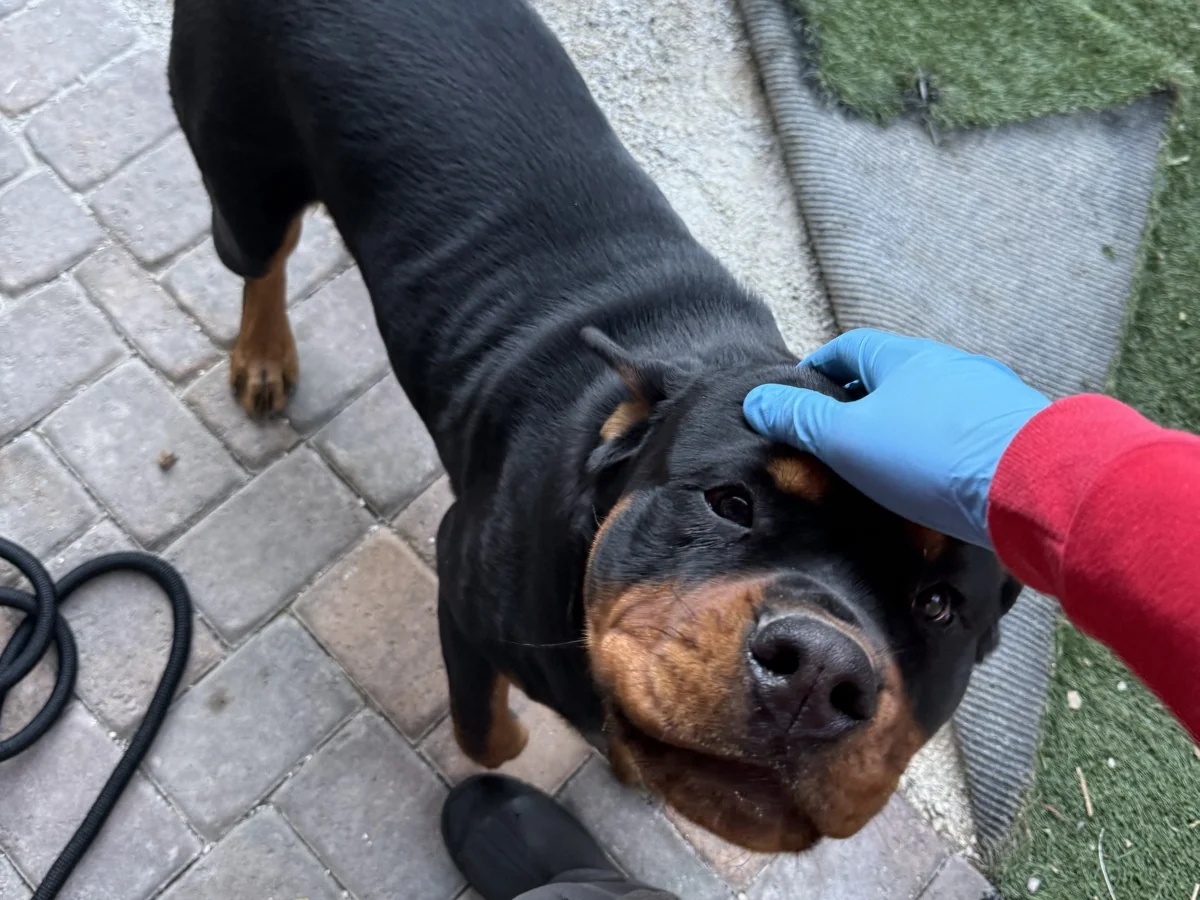
How It Gets Inside in the First Place
Almost nobody tracks in a visible mess. If you had stepped in something obvious you would have noticed at the door. What actually comes in is smaller and more persistent, and it arrives three ways.
- Paws. The main one. Dogs walk over ground where waste has dried and broken apart, and dry residue clings to pads and to the fur between them. Then they walk straight across your floor.
- Shoes. The pair by the back door that you wear out to the bin, to the grill, to move the hose. Shoe treads pick up more material than paws do and they hold it longer.
- The mat. The unglamorous one. A mat collects everything from routes one and two, and once it is loaded it stops removing anything and starts redistributing it.
In this climate the dried version is the one to focus on. Waste dries fast in a Las Vegas yard, and dried waste does not stay a pile. It breaks up, works into gravel, turf infill, and soil, and moves around with wind and foot traffic. That is the material that comes inside, and it is invisible until it has been arriving for a month.
The Back Door Path: Paws, Shoes, and the Mat
Watch the actual path for a day and the fix becomes obvious. The dog comes in at the same door, crosses the same three feet of tile, and turns the same corner into the hallway. You come in behind it. Everything concentrates on that short run of floor.
Which means you do not need a whole house strategy. You need to fix six feet of it.
- Two mats, not one. A rough scraping mat outside the door and a washable absorbent mat inside it. One mat trying to do both jobs does neither.
- Wash the inside mat on a schedule. Whatever it collected is still in it. A mat that never gets washed is a storage device.
- Shoes off at that door. Not a house rule you enforce on guests, just a hook or a tray where the yard shoes live.
- Towel or wipes within arm's reach of the door. Not in the laundry room. At the door. A routine that requires you to walk somewhere is a routine you will drop in a week.
Why the Smell Shows Up on Tile and Carpet
The reason indoor cleaning feels like it is not working is that hard floors and soft floors both hold onto this, just in different places.
On tile, the tile itself is not the problem. Grout is. Grout lines are porous, they sit slightly below the surface, and a mop pushes material along them rather than lifting it out. So you mop, the floor looks clean, and the smell comes back when the room warms up in the afternoon.
On carpet, it goes through the fibers into the backing and the pad. Surface cleaning gets the visible part, the rest stays underneath, and you get the same afternoon return.
Outside, the equivalent surface story is concrete, which is porous in exactly the same way and holds staining and odor for the same reasons. That one has its own article: dog waste stains on a concrete patio covers what actually happens when waste sits on hard surfaces outdoors.
The practical takeaway is not a product recommendation. It is that if material keeps arriving daily, no indoor routine gets ahead of it. You are cleaning a destination while the supply line runs.
A Wipe and Mat Routine People Actually Keep
The routines that survive are the ones with no steps in them. Here is the honest version.
- Keep the towel at the door. One old towel on a hook, within reach without moving your feet. Wipe front paws, then back. It takes about ten seconds once it becomes a habit.
- Do it after the yard has been watered, always. Damp ground transfers far more than dry ground does. If your drip ran this morning, wipe.
- Check between the pads. That is where residue actually collects, not on the pad surface.
- Do not turn it into a bath. A quick wipe every time beats a thorough cleaning once a week, because the point is interrupting the daily supply.
- Wash the mat and the towel together on whatever day you already do laundry, so it never becomes its own task.
If anyone in the house has a specific health concern about what dogs bring in from the ground, that is a doctor and vet conversation rather than a housekeeping one. The ground side of that topic, in general terms, is covered in the post on hookworms in the yard, which explains why soil comes up in that conversation at all.
Turf and Rock Yards Move Different Things Inside
People assume artificial turf keeps more outside. It does not, it just changes what comes in.
Rock and decomposed granite yards send in dry dust and grit. It is gritty underfoot, it collects in the grout lines and along the baseboards, and it is the version most Vegas homeowners are dealing with. You feel this one before you smell it.
Turf yards send in whatever is sitting in the infill. Turf holds moisture underneath the blades even when the surface feels dry, so what arrives indoors tends to be damp rather than dusty. Damp is worse for odor and better for staying stuck to a paw all the way across the room.
Real grass is the middle case: less dust, more moisture, and clippings that carry material along with them.
None of that is an argument for or against a surface. It is an argument for knowing which version you have, because the mat and the wipe routine are the same either way but the reason they work is different.
The One Change That Fixes the Source
Everything above manages transfer. It is worth doing and it helps. But the honest ending to this post is that mats and towels are the last line, not the first.
If waste is sitting in the yard, drying, breaking apart and working into the surface, then the supply is continuous and you are managing it forever. If there is nothing on the ground to step in and nothing dried into the gravel or the infill, the supply mostly stops and the mat has almost nothing to catch.
That is the whole case for a schedule rather than an occasional catch up. Not that the yard looks nicer, though it does. That the back door stops being a conveyor belt. If you would rather not be the one out there every few days making that happen, the quote form asks how many dogs you have, how big the yard is, and how often you want service.
If the floor by the back door is the reason you are reading this, the fix starts outside it. Tell the quote form your dog count, yard size, and how often you want service, and you will have a price in about a minute. Questions first are fine, call or text (725) 200-2028, Monday through Friday.
Get my free quoteCommon Questions About Tracking It Indoors
How is it getting in?
Paws first, shoes second, and the mat third once it is loaded and starts handing material back.
Why does the house still smell after I clean?
Grout lines and carpet backing hold it, and material keeps arriving daily. You are cleaning the destination while the supply continues.
Does turf keep more outside?
No. Rock sends in dry grit, turf sends in damp material from the infill. Different problem, same amount of attention.
What routine actually sticks?
Two mats, a towel hanging at the door itself, and outdoor shoes coming off there. Nothing that requires walking to another room.
Does regular scooping help?
It removes the source, which is the part no indoor routine can reach.
A shared park makes this harder than a private yard does, and what you bring home from the dog park covers the paws, the leash and the toys that come back in the car with you.
Want your exact monthly price for this yard? The quote form takes about 60 seconds.
Get my free quote