Quick answer
Can hookworms live in my backyard?
Hookworm eggs leave an infected dog in its waste and develop outside on the ground, which is why the yard enters the conversation at all. In a Las Vegas yard the shaded, damp, over irrigated corners matter more than open sun baked rock. Prompt, consistent removal is the part a homeowner controls, and the dog itself is a question for your vet.
If your vet has mentioned hookworms in the yard, the sentence that usually lands hardest is that this is not only a dog problem, it is a ground problem. Before anything else: I am a pooper scooper, not a veterinarian, and nothing here is veterinary or medical advice. Your vet handles the dog. Your doctor handles the people. I handle the part outside, and that is the part this post is about. Everything below is general, publicly known information written for a Las Vegas homeowner trying to understand why the backyard keeps coming up.
What Hookworms Actually Are, in Plain Terms
Hookworms are intestinal parasites. The dog carries the adult worms, and the eggs leave the dog in its feces. Once that waste is on the ground, development happens out there, in the soil, not inside the animal. That single fact is the reason your vet talked to you about the yard instead of only handing you a treatment.
So there are two separate stories running at the same time. One is inside the dog, and that one belongs entirely to your veterinarian. The other is on your ground, and that one belongs to whoever is responsible for the yard. Treating one and ignoring the other is the mistake people make, and it is why hookworms have a reputation for feeling like they keep coming back.
How a Yard Becomes the Source
A yard does not become a problem on its own. It becomes a problem when contaminated waste is left on it long enough to break down into the surface. The sequence is not complicated:
- An infected dog leaves waste on the ground.
- The waste sits. Sun, irrigation, wind, and foot traffic break it apart.
- What is left is no longer a pile you can pick up. It is material worked into the top layer of soil, gravel, or turf infill.
- Dogs keep using the same ground, because dogs are creatures of habit and they use the corner they have always used.
The important part of that list is step two. As long as the waste is still a pile, removing it removes the source. Once it has broken down into the ground, nobody can pick it back up, and you are now dealing with the yard rather than with waste. That is the entire practical argument for not letting waste sit.
Why Bare Feet and Bare Paws Come Up
You will see a lot of advice about not walking barefoot on ground where dogs go. That advice exists because some hookworm species can affect people through skin contact with contaminated soil. That is a widely repeated public health point, and I am repeating it as exactly that. It is not a diagnosis, it is not a risk estimate, and if anyone in your house has a symptom of any kind, the answer is a doctor, not a blog post and definitely not a scooper.
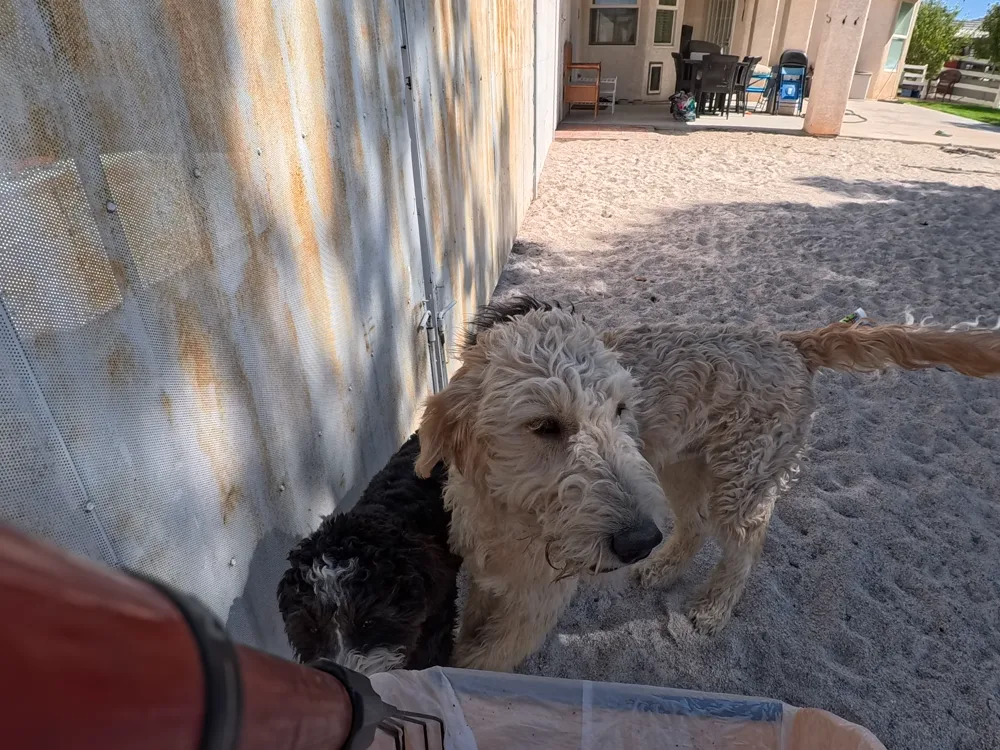
For the dog, the same idea applies to paws and to the simple fact that dogs investigate ground with their nose and their mouth. This is why the shaded corner your dog sleeps in, the patch of turf beside the patio, and the strip of damp gravel under the drip line matter more than the middle of an open, sun baked yard.
Kids are the other reason this comes up, and that has its own article. The wider picture of what waste does sitting in a hot Las Vegas yard is covered in the post on dog waste and summer heat in Vegas.
What Desert Heat and Dryness Do, and What They Do Not
Here is where Las Vegas owners get an honest advantage and then talk themselves into over trusting it.
Direct sun and dry ground are generally unfriendly to larvae. That is publicly known and it is genuinely useful, because a lot of a Vegas yard is open, exposed, and brutally hot for months. If the entire yard were bare rock in full sun all day, the climate would be doing real work for you.
The problem is that no yard here is actually like that. Every Las Vegas backyard has the other kind of ground:
- The shaded strip along the north wall that never sees direct sun.
- The damp patch under a drip emitter or a leaking line.
- Turf that stays cool underneath even when the blades are hot.
- The covered patio and the space behind the shed.
- The side yard, which is the single most common place in this valley for a dog to choose and an owner to forget.
Those are the parts of the yard that do not behave like a desert, and they are exactly the parts dogs prefer in summer. So the heat helps. It is not a plan.
What Cleanup Addresses, and What Your Vet Handles
I want to be careful here, because this is the section where a service like mine could easily overpromise, and I am not going to.
What removal does: it takes the source material off the ground before it can break down into the soil. That is a real, meaningful thing, and it is the part a homeowner actually controls. It is also the only part of this that a scooping service touches.
What removal does not do: it is not a treatment, it is not a cure, and it does not undo contamination that is already worked into the ground. I am not going to tell you a yard has been made clear of anything, because I cannot measure that and neither can anyone selling you a spray.
Your veterinarian handles the dog: the diagnosis, the treatment plan, the timing, the follow up testing, and every question about medication. Do not change, shorten, or skip anything they have told you based on something you read online. If waste on your ground is a concern for a specific reason your vet has raised, ask them what they want done outside and follow that.
If you want the yard side handled on a schedule while your vet handles the dog, that is exactly what the quote form is for. It asks how many dogs, how big the yard is, and how often you want service.
Keeping the Yard From Feeding the Cycle
The yard-side habits that matter are unglamorous and they work because they are boring:
- Remove waste promptly and consistently. Not in a burst when it gets bad. On a rhythm, so nothing sits long enough to break down.
- Pay attention to the corners you skip. Side yard, behind the shed, under the patio furniture, along the shaded wall. That is where the dog goes and where the yard stays damp.
- Fix the permanently wet spots. A leaking emitter or a patch that never dries is an irrigation or landscaping job, not a scooping job.
- Wash hands after yard work. Ordinary, and the thing every public health source says first.
If your dog has been treated and the problem keeps returning, the yard is often the missing piece, and that pattern deserves its own read. The post on why a dog keeps getting worms after deworming walks through how the loop actually runs. For a different organism entirely, with a different yard story, the post on parvo and yard cleanup in Las Vegas covers that one on its own terms.
If your vet has told you to stay on top of the yard, I can take that piece off your plate. Tell the quote form how many dogs you have, how big the yard is, and how often you want service, and you will have a price in about a minute. Questions first are fine, call or text (725) 200-2028, Monday through Friday.
Get my free quoteCommon Questions About Hookworms and the Yard
Can hookworms live in my backyard?
Larvae are associated with soil contaminated by infected feces, and warm, damp, shaded ground is friendlier to them than hot, dry, exposed ground. What is happening with your specific dog is a question for your vet.
Can I get them from my own yard?
People can be affected by some species through skin contact with contaminated soil, which is where the barefoot advice comes from. Any symptom in a person goes to a doctor.
Does Vegas heat handle it?
Sun and dryness are unfriendly to larvae, but every yard here has shade, irrigation, and damp corners, and dogs prefer exactly those spots in summer. Do not rely on the climate.
What helps in the yard?
Prompt, consistent removal of the source material, plus attention to the damp and shaded corners. Cleanup is removal, not treatment.
It keeps coming back. What now?
Back to your vet first, since the treatment plan is theirs. Then look at the ground, because a dog reusing the same contaminated corner keeps meeting the same problem.
Want your exact monthly price for this yard? The quote form takes about 60 seconds.
Get my free quote