
Quick answer
How do I switch pooper scooper services without a gap?
Line up the new service first, with a confirmed start date and weekday, then give notice on the old one so the last old visit and the first new visit sit close together. Change the gate code you shared. Switching in cooler months costs almost nothing in a Las Vegas yard, a July gap creates a backlog.
If you are searching for what to do about a pooper scooper not showing up, you have probably already had the thought a few times and talked yourself out of it. The yard looked okay. Maybe they came early. Maybe you are being unfair.
Here is the reframe that makes this simple: the real problem is not whether they came. It is that you cannot tell. A service you have to audit is not saving you anything, because the whole point of paying someone was to stop thinking about the yard.
This post covers how to check properly, how to raise it, and how to switch without leaving a gap. No competitor gets named here, because this is not about any particular company. It is about what you should be able to verify from any of them, including us.
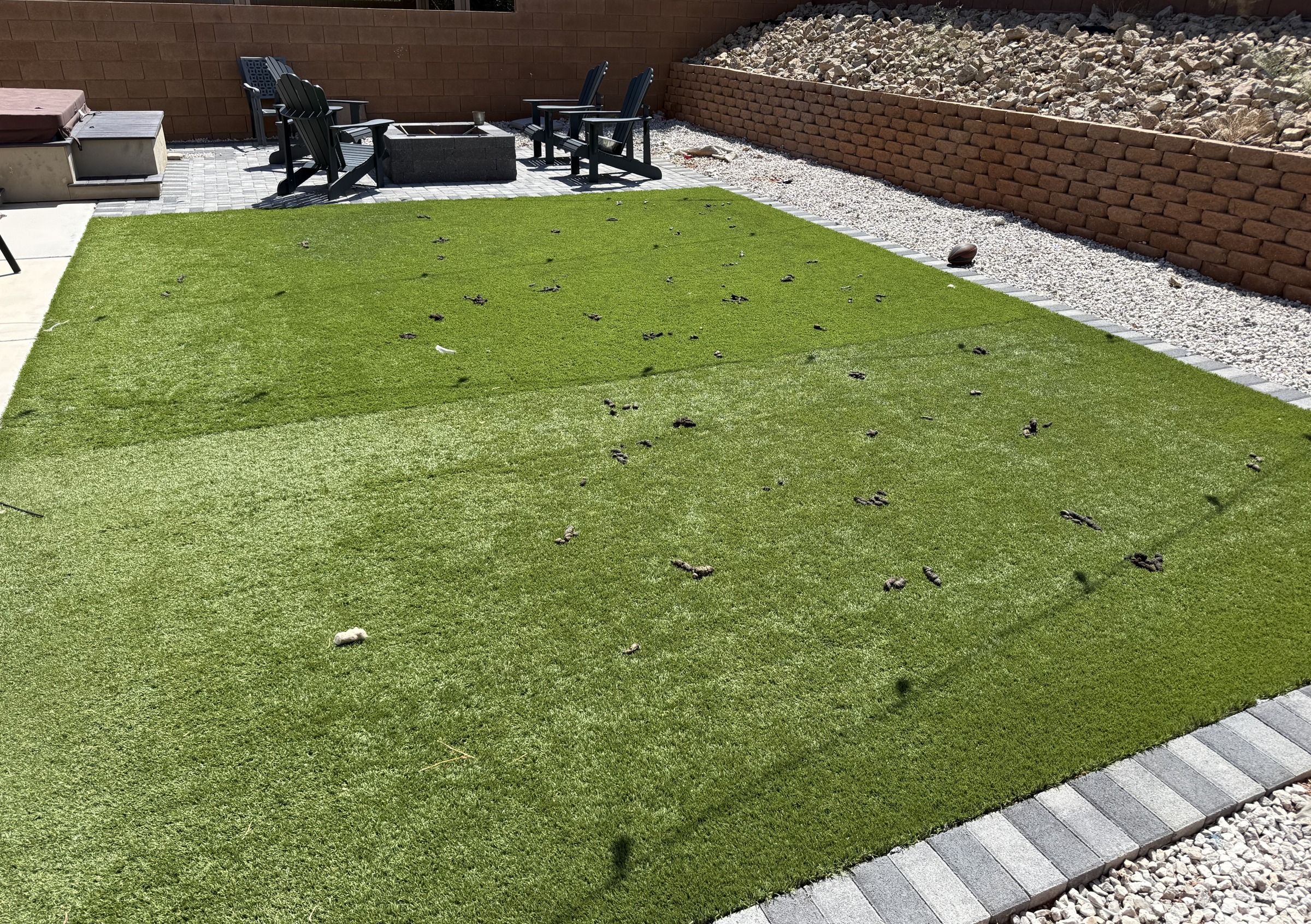
The signs people miss
Missed visits rarely look dramatic. They look like small inconsistencies you notice and then forget.
- The yard smells before your next visit is due. A yard cleared on schedule does not build odor between visits during normal weather. If it does, either the interval is too long or coverage is incomplete.
- Only the middle is clear. The open lawn or turf looks great, and the wall line, the side yard, and behind the shrubs do not. That is the signature of a fast pass rather than a full walk.
- Nothing new is in your trash bin. If waste is going into your own bin, as it should, then a service visit leaves evidence. An unchanged bin on the day after your visit is a real signal.
- The gate is exactly as you left it, every time. Latch positions vary slightly when a human opens and closes a gate. Perfect sameness week after week is worth noticing.
- Your service day drifts. It was Tuesday, then it was sometimes Thursday, then it was hard to say. Drift usually means the route is overloaded.
- You find piles that are clearly older than the interval. Waste ages visibly in this climate. Something dried, cracked, and bleached by sun has been there longer than a few days.
- Communication got thin. Messages take days, or you get no notice when something changes.
Any one of these on its own can have an innocent explanation. Three of them together is a pattern.
Why the yard looks fine is not proof
You walk out, glance around, and nothing jumps out. So you conclude the visit happened. But a glance from the patio door is not an inspection. In a Las Vegas yard specifically, flat midday light on decorative rock hides dried waste almost completely, and the areas that matter most, the perimeter, the shade, the side yard, are exactly the areas you cannot see from the door.
If you want to check properly, do it once, deliberately: walk the entire perimeter, the side yards, and behind any shrubs on the afternoon of your service day. That tells you more than a month of glances. What a thorough visit should actually cover is laid out in what actually happens on a pooper scooper visit.
What photo proof changes
The entire problem disappears with one habit: a dated photo of the cleared yard, sent after every visit.
It is not a courtesy feature. It is the mechanism that makes the arrangement verifiable, because it turns work done where you are not into evidence instead of trust.
What it gives you in practice:
- You never have to check. The proof arrives before you would have thought to look.
- The gate is confirmed closed. If the photo shows the latched gate, that is the single most consequential detail in this job, confirmed every visit rather than assumed.
- Disputes become specific. Instead of arguing about whether anyone came, you can point at a corner in a photo and say this area.
- You get a dated record. Useful if an HOA question ever comes up.
Every one of our visits ends this way: gate latched, photo of the cleared yard and the closed gate sent to your phone before I leave. If you want that from your current provider, ask for it. If you want it from us, you can get a quote in about a minute.
Having the conversation first
Before you cancel anything, send one clear message. This is genuinely the right move, not a politeness.
Most missed visits are not dishonesty. They are a route that grew faster than the operator could handle, a scheduling change that never got communicated, a vehicle problem, or an illness. Those are fixable, and a good operator will want to know and will fix it immediately.
Make the message specific rather than accusatory. Something like: my service day is Tuesday, and on the last two Tuesdays the perimeter and side yard still had waste in them. Can you tell me what happened, and can I get a photo after each visit going forward?
Then watch what happens over the next two visits. A provider who takes it seriously will respond quickly, explain plainly, and change something. A provider who gets defensive, blames you, or promises without changing anything has told you what you needed to know. Either way you are no longer guessing.
Switching without leaving a gap
If you are moving on, sequence it so the yard never goes unattended. A yard that sits for three weeks between providers in the summer becomes a much bigger job, and you end up paying for a cleanup you did not need.
The order that works:
- Get the new service lined up first, including a confirmed start date and day of the week.
- Then give notice on the current one. Check whether they require notice, and be straightforward about it. There is no reason for it to be awkward.
- Overlap by a few days if you can so the last old visit and the first new visit are close together.
- Be honest about the yard's current state when you get quoted. If there is a backlog, say so. It affects whether an initial cleanup is needed, and you want that priced up front rather than as a surprise. The cost guide explains what actually drives pricing.
- Change the gate code if you gave one out. Basic housekeeping, and it takes a minute.
- Switch in the cooler months if you have the choice. A gap in January costs you almost nothing. A gap in July costs you a lot.
What to ask a replacement before you sign
Ask these six questions. Vague answers matter more than the answers themselves.
- Do I get a photo after every visit? This is the one. If the answer is anything other than yes, you are back where you started.
- Who physically shows up at my gate? The owner, an employee, a rotating assignment. There is no wrong answer, but you should know, and you should know whether it changes week to week.
- What day am I on, and what happens if it moves? A fixed day and proactive notice when it shifts.
- Where does the waste go? It should go into your own trash bin on the property, double bagged. Anything else deserves a follow up question.
- Is there a contract, and how do I stop? You should be able to change frequency or leave without a penalty.
- What happens if a visit gets missed? A real answer here tells you the operation has thought about failure.
The longer version of this checklist, including insurance and pricing questions, is in the guide to choosing a pooper scooper in Las Vegas.
Common questions
Should I confront them or just leave?
Send one specific message first. Most problems are logistical and get fixed fast. If nothing changes, leave without second guessing it.
How do I know for sure whether they came?
A dated photo of your yard after each visit. Everything else is inference.
Will I be charged extra by the new service?
If the yard has a backlog, expect an initial cleanup quoted separately from the recurring visits. It should be stated clearly before you start.
Is it rude to switch?
No. You raised it, you gave them a chance to fix it. That is the whole obligation.
How fast can a new service start?
Usually within the current or following service week, depending on the route. Service days are Monday to Friday.
The bar here is low and a lot of yards are not clearing it. Same day every week, the whole yard covered, waste in your own bin, gate latched, and a photo in your hand before you thought to wonder. Get a quote for your yard, or call or text (725) 200-2028 and tell me what has been going wrong.
A lot of missed visits turn out to be an access problem rather than a service problem, and the guide to backyard access walks the gate, the latch and the blocked side yard in detail.
Want your exact monthly price for this yard? The quote form takes about 60 seconds.
Get my free quote