
Quick answer
Do small dogs need a pooper scooper service?
Sometimes, and the yard decides it more than the dog does. A small dog with a decent yard and a daily habit needs nobody. A compact Las Vegas turf or rock yard is different, because small waste settles between the blades or the stones, disappears from view within a day, and concentrates in the same shaded corner.
Do small dogs need a pooper scooper? It is a fair question and it deserves a fair answer, so here is mine up front: sometimes no. If you have one small dog, a decent sized yard, and you genuinely pick up every day, you do not need to hire anybody and I am not going to pretend you do. But the assumption underneath the question is usually wrong, and it is worth ten minutes to explain why. In Las Vegas specifically, small dog yards go bad in a way owners do not see coming.
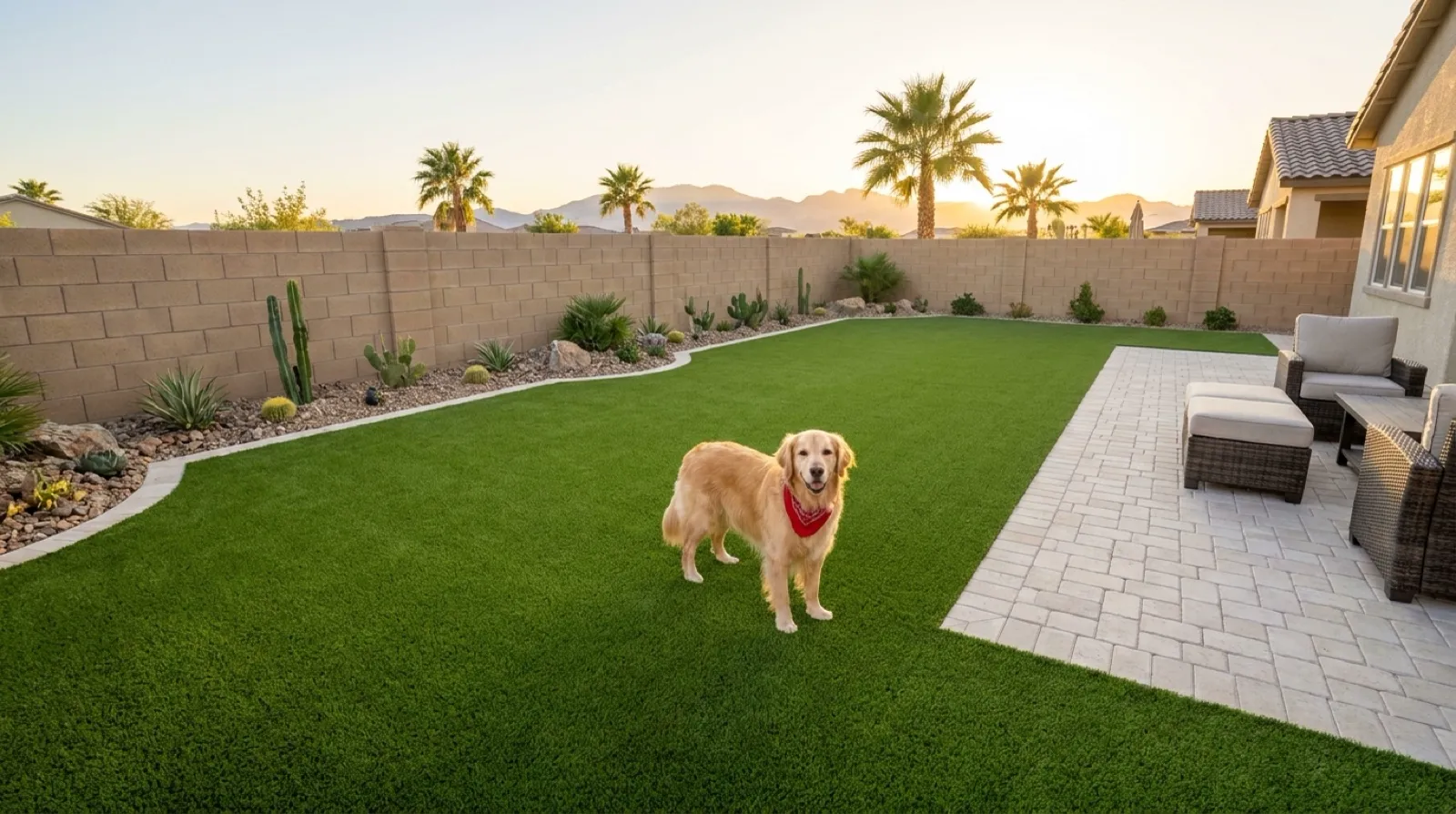
The Short Answer
The size of the dog is not the variable that decides this. The size of the yard is, and so is whether anyone is actually keeping up.
Two households, both with one small dog:
- Household one: a decent backyard, mostly rock, one adult who picks up every couple of days without being reminded. This yard is fine. Genuinely fine. Save your money.
- Household two: a compact turf backyard, two working adults, a kid, and a good intention to deal with it on the next day off. This yard is a real job by week three, and the fact that the dog is small is the reason nobody notices until it is unpleasant.
Most people asking this question are in household two and think they are in household one. That is the whole post in two sentences, but the reasons why are worth reading, because they are specific to this climate and these yards.
Where the Small Dog Myth Comes From
The myth is intuitive: less dog, less waste, less problem. The first half is true. The second half does not follow, for three reasons.
The first is that small dogs commonly go more often than big ones. Not a number, just something anyone who has owned both will recognize. So the per deposit difference is real, and the daily difference is smaller than you would guess.
The second is that small dogs are usually in small yards. That is not a rule, but it holds often enough to matter. A compact backyard has less ground to absorb the same routine, and concentration is what causes problems, not raw volume.
The third is the one that does the most damage: small waste is easy to not see. That is not the same as it not being there, and it is where the yard quietly gets away from people.
Frequency Beats Volume in a Small Yard
The thing that makes a yard unpleasant is not how much arrives at once. It is how long material sits in the same place.
A large dog in a big yard spreads output across a lot of square footage, so no single spot takes much. A small dog in a compact yard does the opposite: same few spots, every single day, usually the softest and shadiest ones. Over a month, that corner has taken more repeated use than any single spot in the big yard did.
This is why frequency is the lever that matters for small dog households. Weekly service on a small yard clears each spot before anything builds in it. Monthly catch ups do not, because by then the material has already dried, broken down, and worked into whatever surface it was on. The general frequency question, for any dog, is covered in the post on how often to pick up dog poop in Vegas.
Why Small Waste Disappears Into Turf and Rock
Here is the most Las Vegas specific part of this, and the reason small dog owners are so often surprised.
On artificial turf, small waste does not sit on top of the blades the way a large dog's does. It settles down between them, and some of it goes into the infill layer underneath. Within a day or two it is invisible from the patio door and effectively invisible from three feet away. It is still there, and it is now in the layer that holds moisture and odor. The post on dog waste on artificial turf covers what happens to it after that.
In decorative rock and gravel, the same thing happens faster. Small pieces fall between the stones, dry, and break apart into the rock layer where nothing can retrieve them. A rock yard with a small dog can look completely clear and still be building up material below the visible surface.
On real grass, it settles into the blades and is only visible directly from above, which is not the angle anyone looks from.
So the reassuring evidence people rely on, standing at the door and seeing a clean looking yard, is exactly the evidence a small dog yard does not produce reliably.
Odor Does Not Scale Down With the Dog
This is the point that changes minds, because it is the one people can verify themselves.
Yard odor is a function of accumulation over time in a spot that does not dry out. Small dogs are extremely consistent about their spots, and the spot is almost always the shaded, cooler corner, because that is the comfortable place to be in a Vegas yard for eight months of the year. That corner also happens to be the slowest to dry, whether it is shaded turf, granite next to a drip emitter, or the strip down the side of the house.
Small amounts, same corner, every day, in the least ventilated part of the property, through a summer. That produces exactly the smell people think only big dogs cause.
The test is simple and you can run it this afternoon. Go stand in the shaded corner of your yard, not on the patio, and take a breath. That is the answer.
What a Realistic Routine Looks Like
If you are doing it yourself, three things make a small dog yard manageable:
- Go to the spots, not to the yard. You already know the two or three places. Check those specifically, in the shade, up close.
- Do it before dark. Small waste is hard to see in good light and impossible in low light.
- Stay on a rhythm rather than reacting. Waiting until you notice a problem means waiting until material has already gone into the surface.
If you would rather it just be handled, weekly is where most single small dog households land, and small yards with more than one dog or with kids using them usually go to twice a week. The quote form asks how many dogs, how big the yard is, and how often you want service, and it prices a small yard as a small yard.
And if your situation is the opposite one, the companion post on large dog yard cleanup in Las Vegas covers what changes when the dog is big rather than little.
One little dog and a yard you are not really keeping up with? That is a normal, common, completely fixable situation. Get a price in about a minute from the quote form, or call or text (725) 200-2028, Monday through Friday, and ask whatever you want first.
Get my free quoteCommon Questions About Small Dogs and Scooping
Do small dogs need a service?
It depends on the yard and on whether anyone is actually keeping up, not on the dog. A big yard and a daily habit means no. A compact turf yard and good intentions means yes.
Why does the waste disappear into my turf?
Smaller pieces settle between the blades and into the infill instead of sitting on top. Rock does the same thing, faster.
Do small dogs smell less?
Less material, but they concentrate it in one shaded corner every day, which is the recipe for odor in a Vegas yard.
How often should I book?
Weekly for most single small dog homes. Twice weekly for small yards, more than one dog, or daily kid use.
Is it worth paying for one little dog?
If you cannot say for certain that the shaded corner is clear right now, yes.
Want your exact monthly price for this yard? The quote form takes about 60 seconds.
Get my free quote