
Quick answer
Do you scoop gated golf course homes in Rhodes Ranch?
Yes, and access gets arranged once before the first visit, by resident vendor list, a gate code on file, or calling the entry on your route day. Homes backing the Rhodes Ranch golf course have an open view line, so odor carries into a shared corridor faster than it would between boxed in backyards. Rock gets worked through, not skimmed.
Looking for a pooper scooper in Rhodes Ranch? Two things about this community change the job compared to an open street in the middle of town. The first is access, because a gated entry means the person doing the work has to be set up to get in before the first visit rather than figuring it out at the gate. The second is presentation, because a lot of these homes back a golf course or a walking route, and a yard here is looked at by more people than the ones who live in it. Here is how I set up service on a Rhodes Ranch property.
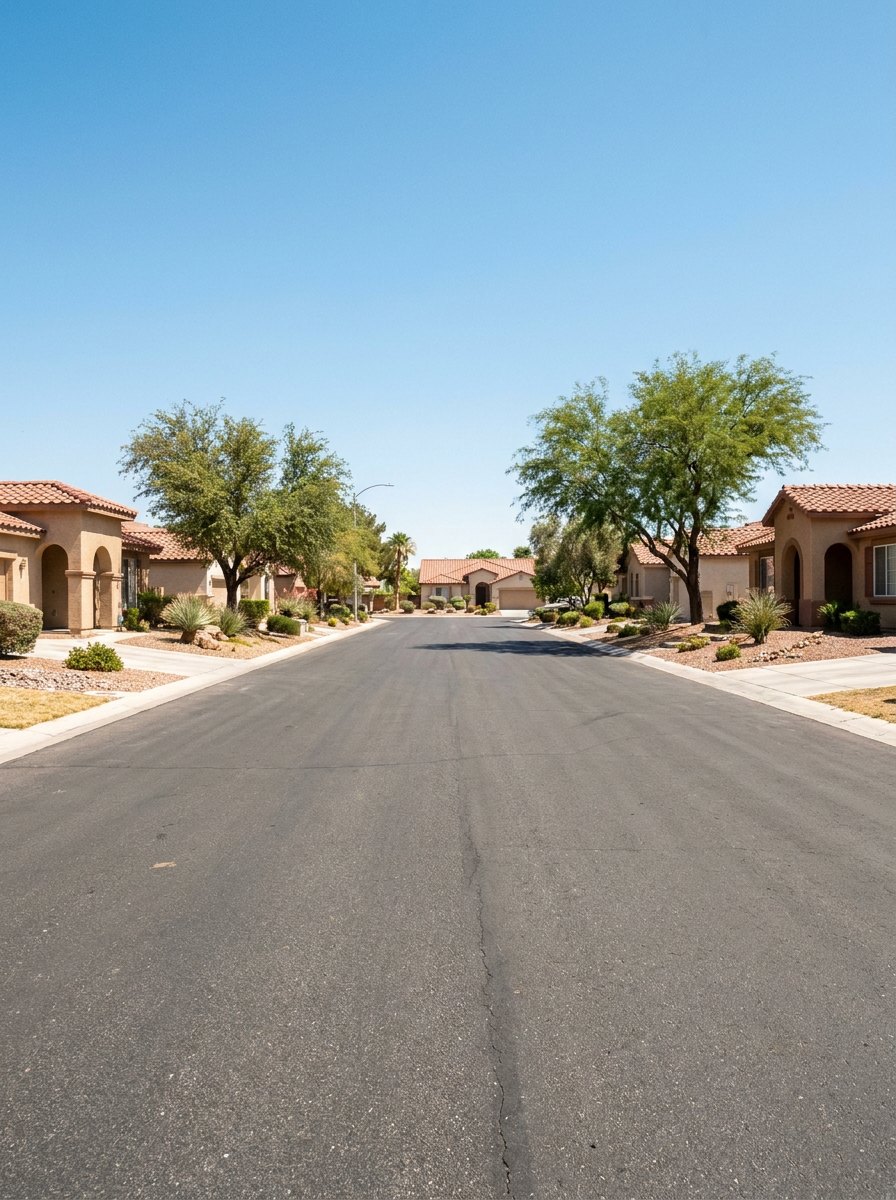
What Rhodes Ranch Yards Have in Common
Rhodes Ranch is a gated master planned community in the southwest valley, built around a golf course, made up mostly of tract homes that went up from the late nineties onward. That history gives the neighborhood a very consistent yard profile.
- Standard tract footprints. A patio, a strip of turf or grass, a rock border, and block walls on three sides. Usable, but not sprawling.
- Landscaping that has had time to fill in. Trees planted two decades ago actually throw shade now, which changes where a dog chooses to go.
- Mixed surfaces in a small footprint. Almost every yard here is part rock and part turf or grass, and those two surfaces hide waste in completely different ways.
- A quiet standard of upkeep. Yards here are maintained. That is the norm on these streets and people notice when a yard slips.
None of that makes a Rhodes Ranch yard hard. It means the margin is thin. A walled tract yard in July does not give you three weeks of grace before the odor tells on you.
Gated Community Access and How a Scooper Gets In
This is the part people ask about first, and it is genuinely simple once it is set up. Gated entries here are used to service traffic. Landscapers, pool techs and pest control companies come through every day. The only thing that matters is that the access method is arranged before the first visit instead of at the gate.
There are three ways it usually works. You add the business to your resident vendor or guest list so the entry has it on file. You give me a gate code that stays on the account. Or you call the visit in on your route day. Any of the three is fine, and once it is set it does not need to be revisited.
The other half of access is your side gate. If it has a lock, I need to know the combination or where the key lives. If the gate sticks, tell me. If a dog is out in the yard on your service day, tell me that too, and we will work out the handling that keeps everyone calm. All of this goes on the account once and then it just runs.
Golf Course Frontage and What the Neighbors Notice
A meaningful share of homes in Rhodes Ranch back the course or sit along a shared path. That changes the calculation in a way homeowners on an interior street do not have to think about.
A yard on the golf course perimeter has a low or partly open view line, which means the yard is visible from outside the property. Odor also travels better in an open corridor than it does in a boxed row of backyards. So the thing that gets a homeowner a polite note is rarely a pile someone spotted. It is usually a smell somebody walked past in the afternoon heat, or waste that accumulated long enough to draw flies to a shared area.
The fix is the least dramatic one available: do not let it build up. A yard cleared on a schedule never creates the condition in the first place. If you want the fuller picture of what associations here typically enforce and what they usually cannot, the guide to dog poop HOA rules in Las Vegas lays it out.
Turf, Rock, and Compact Tract Lots
The mixed-surface yard is the single biggest reason a quick pass misses things here.
Decorative rock is the worst offender. Waste settles down between the stones, dries in the sun, and a fast skim over the top leaves most of it sitting an inch below the surface. You cannot see it and you can absolutely smell it in August. Rock has to be worked through, not glanced at.
Artificial turf looks like the easy surface and mostly is, except that solids sit on the blades and anything left behind works down into the infill. Real grass hides small waste in the blades and shows the burn spots later.
Then there is the shade line. In a mature yard, dogs pick the coolest strip and use it repeatedly, which is usually the base of a wall or under whatever tree has finally grown up. That strip needs checking every visit because it is where the concentration is, not the middle of the yard where the eye goes first.
Choosing a Frequency
Weekly is the right default for most Rhodes Ranch homes with one or two dogs and a standard backyard. It keeps waste from ever reaching the dried out, broken up, scattered stage that makes a yard smell even after it has been cleaned.
Twice a week earns its keep in three cases. Three or more dogs simply out-produce one visit. A smaller backyard concentrates the same volume into less space, so odor and flies arrive sooner. And if kids or guests are using the yard most afternoons, you want the ground clear more often than once every seven days regardless of the arithmetic.
Every other week is a real option for a light situation: one smaller dog, a bigger lot, and a household that picks up a little in between. It is just not what I would put a walled tract yard on in the middle of summer.
For the number on your specific property, the quote form asks how many dogs you have, how big the yard is, and how often you want service, and prices it right there. Cost moves with those three things, so a yard by yard answer is the only honest one.
Getting Started in Rhodes Ranch
Rhodes Ranch sits inside the wider Spring Valley service area, and if you want the view across the whole side of town rather than one community, the post on dog waste removal in Spring Valley covers the conditions that affect the southwest valley generally. This one is the Rhodes Ranch version: gated access, golf frontage, and compact mixed-surface lots.
Every visit runs the same way. I walk the yard in a pattern instead of eyeballing it, work the rock rather than skimming it, clear the turf and the shade line along the walls, double bag the waste and put it in your own trash bin on the property, latch the gate, photograph the latch and the finished yard, and send you the photos. Service days are Monday through Friday. Poop Scoop Dude® is locally owned, and your yard is assigned to a route rather than a dispatch pool, so you see the same team at your gate.
There are no contracts. If a schedule stops fitting your life, you change it or you stop.
Want the exact price for your Rhodes Ranch yard? Tell me how many dogs, how big the yard is, and how often you want service, and the quote form gives you a number in about a minute. If you would rather ask questions first, call or text (725) 200-2028, Monday through Friday.
Get my free quoteCommon Questions About Scooping Service in Rhodes Ranch
Do you serve Rhodes Ranch?
Yes. It is inside the southwest valley service area, including 89148. Service days are Monday through Friday.
How do you get through the gated entry?
Whichever way you prefer. Add the business to your resident vendor list, leave a gate code on the account, or call the visit in on your route day. It gets set up once.
How often should a Rhodes Ranch yard be scooped?
Weekly for most homes with one or two dogs. Twice a week for three or more dogs, a small backyard, or heavy summer use.
Do I need to be home?
No, as long as the side gate is reachable. The gate gets latched and photographed behind me.
Where does the waste go?
Double bagged into your own trash bin on the property at the end of the visit.
Want your exact monthly price for this yard? The quote form takes about 60 seconds.
Get my free quote