If you have noticed yellow patches, brown spots, or dead circles in your yard where your dog tends to go, waste damage is a likely cause. The fix is straightforward, but understanding what is happening underneath helps you act on the right timeline. Las Vegas conditions make that timeline shorter than most dog owners expect.
How dog waste damages grass
Dog feces damages grass in two distinct ways. First, it physically smothers the grass underneath it. A pile sitting on a patch of lawn blocks sunlight, traps heat, and cuts off airflow. The grass beneath it cannot photosynthesize, and in summer heat it begins to die within days rather than weeks.
Second, waste is high in nitrogen. Nitrogen is a fertilizer in small amounts, but at the concentrations found in dog waste it acts more like a burn agent. As the pile breaks down and rain or irrigation water moves nitrogen into the soil, the grass roots receive a concentrated dose they cannot absorb. The result is the yellow-to-brown pattern you see around where the waste sat, even after you have removed it.
Feces also raises the acidity of the soil underneath the affected spot. Grass in the Southwest is typically grown in alkaline conditions, and a localized acid spike pushes the pH out of the range the grass can tolerate. The combination of smothering, nitrogen concentration, and acidification is why the dead spot often outlasts the waste itself by several weeks.
Urine damage vs. feces damage: what they look like
Dog urine and dog feces cause different patterns. Knowing which you are dealing with tells you where the problem is concentrated.
| Type | Pattern | Timeline | Recovery |
|---|---|---|---|
| Urine | Yellow or brown circle, sometimes green ring at the outer edge | Visible in 3 to 5 days | Several weeks with consistent watering |
| Feces | Brown or dead patch under where the pile sat, irregular edges | Visible after pile removed, within a week | Slower, may need reseeding in severe spots |
Urine spreads nitrogen over a wider, shallower area. Feces concentrates it in a smaller footprint but goes deeper into the soil and adds the physical smothering component on top. Both are more damaging when they occur repeatedly in the same spot, which dogs tend to do out of habit.
Why Las Vegas lawns are already at a disadvantage
A lawn in a cooler, wetter climate can recover from waste damage through a combination of rainfall dilution, moderate temperatures, and longer growing seasons. Las Vegas lawns do not have those buffers.
Water restrictions in the valley mean most residential lawns run irrigation on a limited schedule. That reduces the dilution effect that would normally move nitrogen away from the root zone. At the same time, summer soil temperatures in Las Vegas can reach levels that stress cool-season grasses on their own. Combine a heat-stressed lawn with a nitrogen burn, and recovery slows considerably.
Grass varieties common in the valley also tend to go dormant in extreme heat, which means a damaged patch that might recover in late summer elsewhere may stay dead until fall overseeding is possible. That is months of a visible dead spot rather than weeks. If you have worked to keep a lawn green during Las Vegas summers, you already know how much effort that takes. Waste damage puts that investment at risk faster than it would elsewhere.
For tips on managing the heat side of this equation, the post on dog poop in Las Vegas summer heat covers how high temperatures accelerate the bacterial and odor issues that come alongside the grass damage.
Artificial turf owners are not off the hook
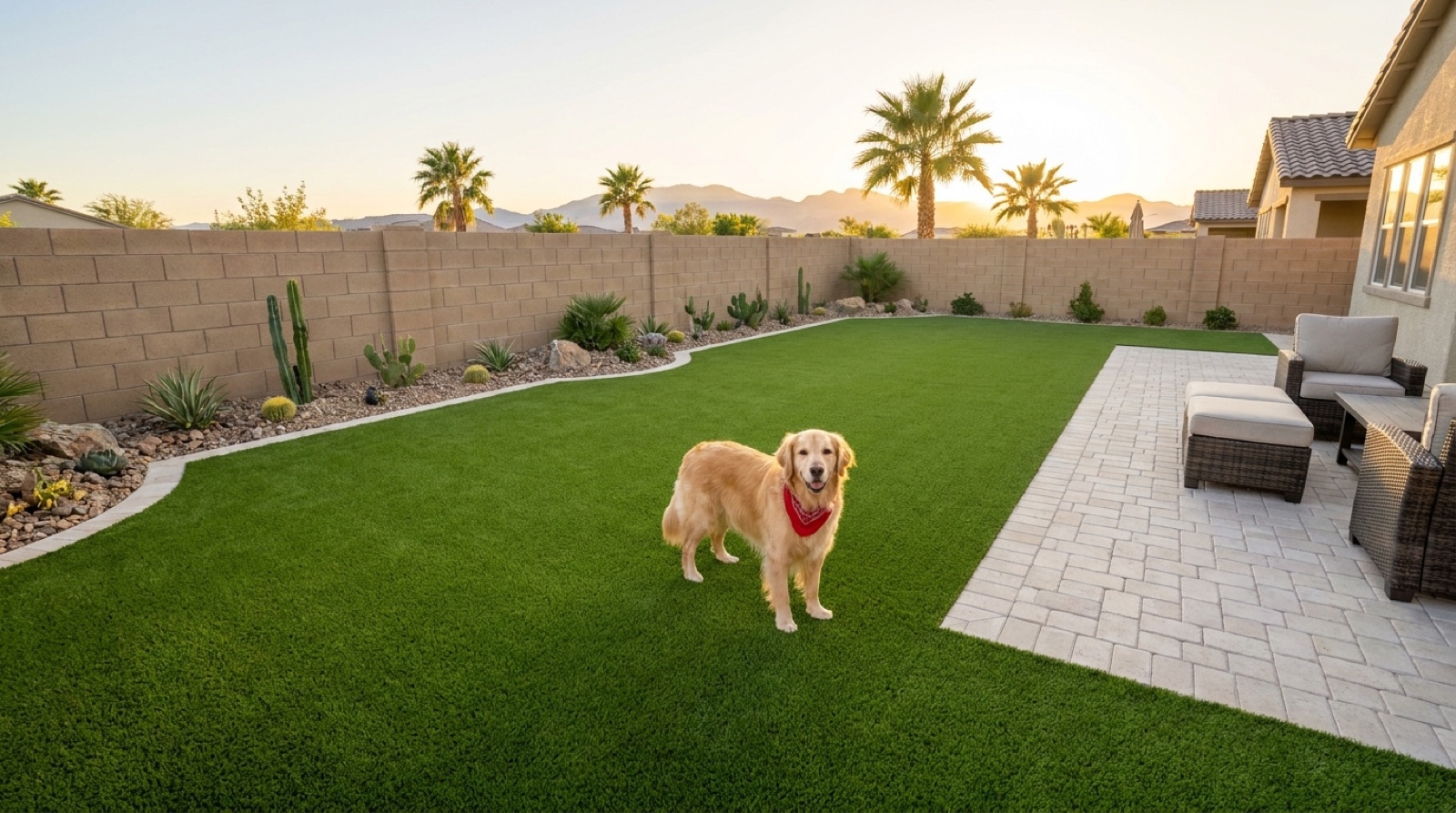
Many Las Vegas homeowners have replaced natural grass with artificial turf to avoid water restrictions and maintenance. Turf does not die from nitrogen burn, but waste on artificial turf creates a different set of problems.
- Bacteria from feces work into the turf fibers and the infill material underneath, where they are difficult to reach with surface-level rinsing.
- Odor builds over time. Artificial turf retains heat, which accelerates odor development. A yard that smells fine in March can become noticeably unpleasant by May.
- Waste residue left on turf can be tracked inside on paws and shoes, raising hygiene concerns similar to those in grass yards.
Regular removal is just as important on turf. The difference is that the failure mode is odor and bacterial buildup rather than dead grass. A deodorizing and sanitizing treatment helps manage the bacterial load that accumulates even with regular scooping. You can read more about that option on our yard deodorizing and sanitizing page.
How to prevent waste damage on your lawn
The most effective prevention is also the simplest: prompt removal. The longer waste sits on grass, the more nitrogen leaches into the soil and the more acidification occurs. Removing waste within a day or two of deposit significantly reduces the damage, particularly for feces.
A few practical steps that help alongside regular removal:
- Rinse high-traffic spots with water after scooping. This dilutes residual nitrogen and helps the soil pH recover faster.
- Rotate your dog's bathroom area if possible. Repeated deposits in the same spot compound the damage and reduce recovery time between incidents.
- Do not let buildup accumulate across multiple visits. A week of deposits is harder on a spot than a single deposit, even if the total volume is similar, because the repeated acidification and nitrogen loading stack.
- Stick to a consistent pickup schedule rather than waiting until the yard looks bad. By the time a dead spot is visible, the damage has already happened.
The question of how often to pick up is covered in detail in our guide to cleanup cadence for Las Vegas yards. The short answer for most yards is at least weekly, with multi-dog homes needing more frequent service.
What to do when damage has already occurred
If you are already looking at dead or damaged patches, the first step is to stop the cycle. Additional waste on or near the damaged area will slow recovery further. Once the area is clear and staying clear, consistent watering helps move residual nitrogen and acid compounds away from the root zone.
Severely damaged patches may not recover on their own, particularly if the soil has been repeatedly impacted over months. In those cases, overseeding or patching in fall, when temperatures drop enough for grass to establish, is often the practical path. Maintaining a regular pickup schedule from that point forward is what prevents the cycle from repeating.
If the yard has gone several weeks without a cleanup, a one-time deep clean gets it back to a manageable baseline before a recurring schedule begins. That initial cleanup is $120 when starting a recurring plan, or $170 as a one-time service with no ongoing commitment. Clients in Henderson and across the Las Vegas valley can get an exact price in about 60 seconds through our online quote form.
How a regular pickup schedule protects your lawn investment
Keeping a lawn green in Las Vegas takes real money, whether that is water costs, lawn care services, fertilizer, or the cost of re-sodding dead sections. Dog waste damage works against all of that when removal is inconsistent. A regular pickup schedule does not require daily effort or a big time commitment. It just requires that waste comes off the grass before it has had enough time to do meaningful damage.
Weekly service handles this for most single-dog households. Bi-weekly service works for lower-traffic yards. For multi-dog households or yards that take heat damage hard in summer, twice-weekly keeps the lawn in better shape through the toughest months. Every visit includes photo proof of completion, so you know the yard was serviced even when you are not home.
If keeping your lawn protected and your yard clean sounds like a job you would rather hand off, get a quote and we will match you to the right schedule. The form takes about a minute and gives you an exact price based on your dog count, yard size, and how often you want service.
Back to the blog